Monday, February 27, 2006

Bird Flu Advisory 

It is recommended to cook chicken to at least 70°C to kill the avian flu virus.

Since the virus is present in chicken shit, it is also advisable to avoid chicken eggs as the eggs come out of chicken arses.

And under no circumstance should you suck raw eggs.

Copyright 2003-2006 Azlan Adnan Legal Notice

(0) comments

Saturday, February 25, 2006

Think Nordic AS 

If Proton has some spare cash and is in the mood for a buying spree, Norway's Think Nordic AS electric car company is in dire financial straits and is looking for a white knight investor.

Copyright 2003-2006 Azlan Adnan Legal Notice

(0) comments

Sudanese forced to 'marry' goat 

A Sudanese man has been forced to take a goat as his "wife," after he was caught having sex with the animal.

The goat's owner, Mr Alifi, said he surprised the man with his goat and took him to a council of elders. They ordered the man, Mr Tombe, to pay a dowry of 15,000 Sudanese dinars (US$50) to Mr Alifi.

"We have given him the goat, and as far as we know they are still together," Mr Alifi said.

Mr Alifi, of Hai Malakal in Upper Nile State, told the Juba Post newspaper that he heard a loud noise around midnight on 13 February 2006 and immediately rushed outside to find Mr Tombe in an act of bestiality with his goat.

"When I asked him: 'What are you doing there?,' he fell off the back of the goat, so I captured and tied him up."

Mr Alifi then called elders to decide how to deal with the case.

"They said I should not take him to the police, but rather let him pay a dowry for my goat because he used it as his wife," Mr Alifi told the newspaper.

Copyright 2003-2006 Azlan Adnan Legal Notice

(0) comments

Africa drought reaches catastrophe levels 


Images like this one in Niger mobilise donors, but often too late

UN warns world on Africa drought

The world is in danger of allowing a drought in East Africa to become a humanitarian catastrophe, the UN warns.

The UN special envoy to the Horn of Africa, Kjell Bondevik, says a disaster can be avoided if funding comes "in a matter of weeks... not months".

Around 11 million people are in serious danger in Kenya, Ethiopia, Eritrea, Somalia and Djibouti, the UN estimates.

The World Food Programme, leading the aid effort, says it has only a third of what it needs to close the shortfall.

Donors had committed just $186m (£106m) of the $574m (£327m) needed, the WFP says.

"I urge donors countries to pledge more and pay. Not only to pledge, but to pay," Mr Bondevik said on a tour to see first-hand the situation in Kenya.

Copyright 2003-2006 Azlan Adnan Legal Notice

(0) comments

Friday, February 24, 2006

Money laundering for beginners 


The Washing Machine:
How Money Laundering and Terrorist Financing Soils Us
by Nick Kochan


Crime School: Money Laundering
True Crime meets the World of Business and Finance
by Chris Mathers


Art and Science of Money Laundering
by Brett F. Woods


Money Laundering:
A Guide for Criminal Investigators
by John Madinger


Dirty Dealing:
The Untold Truth about Global Money Laundering,
International Crime and Terrorism
by Peter Lilley


Funding Evil:
How Terrorism Is Financed--and How to Stop It
by Rachel Ehrenfel


Terror Incorporated:
Tracing the Dollars Behind the Terror Networks
by Loretta Napoleoni


Copyright 2003-2006 Azlan Adnan Legal Notice

(0) comments

Thursday, February 23, 2006

Nuclear energy for Iran 

No Country Should be Deprived of Technologies - Dr Jamaludin

KUALA LUMPUR, Feb 22 (Bernama) -- Malaysia strongly believes no country, regardless of political ideologies, racial composition or religious inclinations, should be deprived of the right to acquire or develop new technologies.

Science, Technology and Innovation Minister Datuk Seri Dr Jamaludin Jarjis said knowledge-rich countries should not deliberately create barriers that prevented less knowledge-endowed nations to strive for scientific and technological progress.

"It saddens me that one of our fellow OIC (Organisation of the Islamic Conference) member states is being prevented from developing nuclear technology for its own economic and social well-being," he said at the 12th General Assembly of the OIC Standing Committee on Scientific and Technological Cooperation in Islamabad, Pakistan, Wednesday.

The text of his speech was made available to BERNAMA.

Dr Jamaludin said even when the widespread use of the Information and Communications Technology had made accessing global knowledge much easier, there were other dimensions, political and social, that might obstruct the ability of developing countries to advance in science and technology.

This, he noted, had widened the gap between the knowledge-rich countries and the knowledge-poor countries.

"We cannot allow such a situation to dampen our nations' goals to harness scientific and technological advancements to enhance the social well-being of the ummah," he added.

-- BERNAMA


Nuclear Energy May Be Back in Vogue

Nuclear energy in combination with renewable sources of energy represented a safe alternative to fossil fuels.

Expectations of a sharp rise in energy demand and the risk of climate change are pushing many countries to return to the idea of nuclear power, the head of the United Nations' International Atomic Energy Agency (IAEA).

Even the most conservative estimates predict at least a doubling of energy usage by mid-century, Mohamed ElBaradei, director general of the IAEA, told a conference on nuclear energy in the 21st century.

He said any discussion of the energy sector Òmust begin by acknowledging the expected substantial growth in energy demand in the coming decadesÒ.

It was unclear what role nuclear power would play, though it appeared to be an increasingly important one, he said.

ÒAll indicators show that an increased level of emphasis on subjects such as fast growing energy demands, security of energy supply, and the risk of climate change are driving a reconsideration, in some quarters, of the need for greater investment in nuclear power,Ò ElBaradei said.

ÒThe IAEAÕs low projection, based on the most conservative assumptions, predicts 427 gigawatts of global nuclear energy capacity in 2020, the equivalent of 127 more 1,000 megawatt nuclear plants than previous projections,Ò he said, Reuters reported.

ElBaradei pointed to nuclear energy policy plans in China, Finland, the United States and possibly Poland as proof that nuclear power may be returning to vogue.

But he warned despite an improved atomic energy industry: ÒNuclear power was dealt a heavy blow by the tragedy of the 1986 Chernobyl accident, a blow from which the reputation of the nuclear industry has never fully recovered.Ò

The explosion at the Chernobyl plant in then-Soviet Ukraine, the worldÕs worst civil nuclear accident, spewed a cloud of radioactivity across Europe and has been blamed for thousands of deaths from radiation-linked illness. More than 100,000 people had to be resettled.

On the topic of climate change and the threat posed by greenhouse gases, ElBaradei said nuclear energy in combination with renewable sources of energy represented a safe alternative to fossil fuels.
ÒNuclear power emits virtually no greenhouse gases. The complete nuclear power chain, from uranium mining to waste disposal, and including reactor and facility construction, emits only 2-6 grams of carbon per kilowatt hour,Ò he said.

ÒThis is about the same as wind and solar power and one to two orders below coal, oil and even natural gas.Ò


The Shifting Sands of Nuclear Public Opinion
16 February 2006

When fashion magazine Elle lists nuclear energy among its top ten "cool, new things" for 2006, you know public opinion is shifting. Scott Peterson, Vice-President of Communications at the Nuclear Energy Institute, told an industry conference in Vienna that rising energy prices had triggered a more popular and positive view of nuclear power.

In the United States at least, support appears to be growing for an industry long haunted by the 1986 Chernobyl nuclear reactor accident. A survey conducted last year by the Nuclear Energy Institute found that 70% of the 1000 American«s surveyed were in favour of nuclear energy. Two thirds of those surveyed said that they would find it acceptable if a new reactor was built at an existing site.

In a separate survey, the Institute asked over 1000 people living within a 10-mile radius of 64 nuclear power stations how they felt. Over 8o% were in favour of nuclear energy. While seventy-six percent of residents said it would be acceptable to add a new reactor to an existing site.

"The poll«s results show that support for new nuclear plants is strong among those residents who live near nuclear plants. This bodes well for the prospect of new plant construction, particularly for those companies considering adding new reactors at existing nuclear plant sites," Mr Peterson said.

As consumers are hit by escalating oil and gas costs they are taking a renewed look at nuclear energy, Mr. Peterson said. Other driving factors include: energy supply and demand; geopolitical consequences; climate change and clean air. Public opinion holds safety and waste issues as the main concerns about this energy source, Mr. Peterson told the annual Conference on Public Information Materials Exchange (PIME) in Vienna, 12-16 February 2006. Some 400 public information specialist from the nuclear industry worldwide met to discuss topics ranging from crisis communications to the future of nuclear energy.

(0) comments

"appalling old waxworks" 

I do believe Prince Charles is an expert on "appalling old waxworks."

He did marry one, after all.

Copyright 2003-2006 Azlan Adnan Legal Notice

(0) comments

Tuesday, February 21, 2006

Hydrogen as a source of energy 

Energy will be one of the defining issues of this century. One thing is clear: the era of easy oil is over. What we do next will determine how well we meet the energy needs of the entire world in this century and beyond.

Hydrogen is abundant. It's non-polluting. It's not a greenhouse gas, nor does its burning generate greenhouse gases. Hydrogen has shown great promise in meeting the world's growing energy demand. But many challenges still remain:

Governments, energy companies and automakers continue to do research and launch pilot projects in the hopes of solving some difficult issues. We hope you'll voice your opinion on how to meet the world's future energy demands.

In a recent poll, respondents were asked:

When do you think hydrogen will become a viable part of the solution?

The Results:

  • 38% chose 10 years
  • 28% chose 25 years
  • 11% chose 50 years
  • 23% chose never
Copyright 2003-2006 Azlan Adnan Legal Notice

(0) comments

Making Sungai Langat navigable 

Selangor to deepen Sungai Langat to transport goods

BANTING, Feb 20 (Bernama) -- A RM30 million project to deepen Sungai Langat so that it can be used as an alternative means of transport will begin soon, Selangor Menteri Besar Datuk Seri Dr Mohamad Khir Toyo said.

He said the state project would be carried out with the cooperation of Megasteel Sdn Bhd, the company which has an integrated steel complex in Olak Lempit near here.

Dr Mohamad Khir said Megasteel had agreed to build a 10 km long canal on its land and a jetty to facilitate transportation of its steel products.

"The canal will not divert the river's flow while the project will help improve the cleanliness of Sungai Langat," he told reporters after taking a boat ride along the river, Monday.

Dr Mohamad Khir added that maintenance of the river would later be handed over to the company which would use the river to transport goods.

Copyright 2003-2006 Azlan Adnan Legal Notice

(0) comments

Monday, February 20, 2006

Pak Lah: close down Guantanamo Bay 


Guantanamo accommodation includes world-class torture facilities at no extra charge

US Should Close Down Guantanamo Bay, Says Abdullah

MELAKA, Feb 20 -- Datuk Seri Abdullah Ahmad Badawi said it is better for the United States to close down the Guantanamo Bay detention centre in Cuba following the disclosure of photographs and stories about the centre becoming more of a torture concentration camp.

The Prime Minister said the United States itself had admitted the offences committed against the detainees there.

"Many groups are of the opinion that the centre should not be continued and should be closed down because the photographs and stories about the centre had indicated that it is being used as a place where torture is being carried out without public lnowledge," he said on Monday.

"Now, it has alrady been exposed and the United States itself admitted the offences, but more (atrocities) are being committed. When the matter was widely talked about, there should no longer be any more cruelty.

"It's better for the United States if the centre were closed down," Abdullah added.

Copyright 2003-2006 Azlan Adnan Legal Notice

(0) comments

China's energy future 

Satisfying China's demand for energy
China, with a fifth of the world's population, consumes only 4% of the world's daily oil output. It imports about three million barrels a day. As China's economy has surged ahead at 10% a year, its own supplies of oil have begun to dry up. The only option has been to import. From zero 10 years ago, China became the world's number two oil importer in 2003.

China seeks end to power shortages
China expects its electricity shortages of recent years to come to an end in 2006. The country could even reach the point of having too much electricity, because of the large number of new power stations coming online.

China's global hunt for oil
China's craving for oil to drive its industrial boom and, to a lesser extent, satisfy its love affair with the motorcar, has helped it in 2003 to race past Japan to become the world's second biggest consumer of petroleum products after the US. In 2004, its thirst grew by 15%, while its oil output only rose 2%.

China's thirst for oil gets into top gear
China is not the biggest oil consumer in the world, that prize goes to America, nor is it the biggest importer - which is also the USA. What China outdoes the rest of the world at is the growth of its appetite. Ten years ago China imported no oil at all. In 2003, it overtook Japan to become the world's second biggest importer. Its thirst continues to grow.

Copyright 2003-2006 Azlan Adnan Legal Notice

(0) comments

The Old Man and the Sea 


Click on one of the images above to get a copy of the book or DVD.

Here, for a change, is a fish tale that actually does honor to the author. In fact The Old Man and the Sea revived Ernest Hemingway's career, which was foundering under the weight of such postwar stinkers as Across the River and into the Trees.

It also led directly to his receipt of the Nobel Prize in 1954 (an award Hemingway gladly accepted, despite his earlier observation that "no son of a bitch that ever won the Nobel Prize ever wrote anything worth reading afterwards").

A half century later, it's still easy to see why. This tale of an aged Cuban fisherman going head-to-head (or hand-to-fin) with a magnificent marlin encapsulates Hemingway's favorite motifs of physical and moral challenge. Yet Santiago is too old and infirm to partake of the gun-toting machismo that disfigured much of the author's later work:

"The brown blotches of the benevolent skin cancer the sun brings from its reflection on the tropic sea were on his cheeks. The blotches ran well down the sides of his face and his hands had the deep-creased scars from handling heavy fish on the cords."

Hemingway's style, too, reverts to those superb snapshots of perception that won him his initial fame:

Just before it was dark, as they passed a great island of Sargasso weed that heaved and swung in the light sea as though the ocean were making love with something under a yellow blanket, his small line was taken by a dolphin. He saw it first when it jumped in the air, true gold in the last of the sun and bending and flapping wildly in the air.

If a younger Hemingway had written this novella, Santiago most likely would have towed the enormous fish back to port and posed for a triumphal photograph--just as the author delighted in doing, circa 1935. Instead his prize gets devoured by a school of sharks. Returning with little more than a skeleton, he takes to his bed and, in the very last line, cements his identification with his creator: "The old man was dreaming about the lions." Perhaps there's some allegory of art and experience floating around in there somewhere--but The Old Man and the Sea was, in any case, the last great catch of Hemingway's career.

Study Guide

Copyright 2003-2006 Azlan Adnan Legal Notice

(0) comments

The Catcher in the Rye 


Click on an image to get a copy of the book (left) or CD (right).

Since his debut in 1951 as The Catcher in the Rye, Holden Caulfield has been synonymous with "cynical adolescent." Holden narrates the story of a couple of days in his sixteen-year-old life, just after he's been expelled from prep school, in a slang that sounds edgy even today and keeps this novel on banned book lists. It begins:

"If you really want to hear about it, the first thing you'll probably want to know is where I was born and what my lousy childhood was like, and how my parents were occupied and all before they had me, and all that David Copperfield kind of crap, but I don't feel like going into it, if you want to know the truth. In the first place, that stuff bores me, and in the second place, my parents would have about two hemorrhages apiece if I told anything pretty personal about them."

His constant wry observations about what he encounters, from teachers to phonies (the two of course are not mutually exclusive) capture the essence of the eternal teenage experience of alienation.

Study Guide

Copyright 2003-2006 Azlan Adnan Legal Notice

(0) comments

To Kill a Mockingbird 


Click on an image to get a copy of the book (left) or DVD (right).

Set in the small Southern town of Maycomb, Alabama, during the Depression, To Kill a Mockingbird follows three years in the life of 8-year-old Scout Finch, her brother, Jem, and their father, Atticus--three years punctuated by the arrest and eventual trial of a young black man accused of raping a white woman. Though her story explores big themes, Harper Lee chooses to tell it through the eyes of a child. The result is a tough and tender novel of race, class, justice, and the pain of growing up.

Like the slow-moving occupants of her fictional town, Lee takes her time getting to the heart of her tale; we first meet the Finches the summer before Scout's first year at school. She, her brother, and Dill Harris, a boy who spends the summers with his aunt in Maycomb, while away the hours reenacting scenes from Dracula and plotting ways to get a peek at the town bogeyman, Boo Radley.

At first the circumstances surrounding the alleged rape of Mayella Ewell, the daughter of a drunk and violent white farmer, barely penetrate the children's consciousness. Then Atticus is called on to defend the accused, Tom Robinson, and soon Scout and Jem find themselves caught up in events beyond their understanding.

During the trial, the town exhibits its ugly side, but Lee offers plenty of counterbalance as well--in the struggle of an elderly woman to overcome her morphine habit before she dies; in the heroism of Atticus Finch, standing up for what he knows is right; and finally in Scout's hard-won understanding that most people are essentially kind "when you really see them." By turns funny, wise, and heartbreaking, To Kill a Mockingbird is one classic that continues to speak to new generations, and deserves to be re-read often.

Study Guide

Copyright 2003-2006 Azlan Adnan Legal Notice

(0) comments

Challenges facing the US wind industry 

The presentations and gossip at the American Wind Energy Association conference in Denver in May l2005 eft some fans of the US wind energy industry with an impression similar to the opening lines of Charles DickensÕ A Tale Of Two Cities. ÒIt was the best of times, it was the worst of times, it was the age of wisdom, it was the age of foolishness ... Ó

In Denver, optimism was readily apparent from the record pace at which the industry is installing (an anticipated) 2500 MW of turbines in 2005. Installed US capacity at the end of 2004 was 6740 MW. Another sign of enthusiasm was the record number of participants, 4100, (up 14%) that flocked to the annual conference. Many of the newcomers, groomed in suits, represented the growing institutionalisation of what was once a cottage industry.

Reflecting the worst of times, however, was the continuing uncertainty over the fate of the production tax credit (PTC). Under US law current at the time of the conference a tax credit of 1.9 cents/kWh was allowed for the production of electricity from qualified wind energy facilities and other forms of renewable energy. The credit, created by the Energy Policy Act of 1992 is applicable to qualifying wind facilities placed in service before 1 January 2006, The Bush administration budget request called for a two-year PTC extension, while the wind industry was looking for five years. In June, the Senate proposed a 10% federal renewable portfolio standard and a three-year PTC extension. The House proposal in April did not include either provision.

Wind advocates said that removing the production tax credits would not necessarily undermine the industry, but continuing them would be a stabilising factor that would remove the ongoing uncertainty that has created a tentative, boom/bust mentality.

According to AWEA, four to six months before the tax credits expire, financial lenders hesitate to provide capital for wind projects. A rush to complete projects before the deadline creates a herd effect. Developers and sponsors dash to stick pylons in the ground, spiking turbine prices, and they largely recede once the PTCs expire. The US wind industry scored banner years in 2001 (1697 MW), 2003 (1687 MW) but nearly withered in 2000 (67 MW), 2002 (446 MW) and 2004 (389 MW) as a result of production tax uncertainty. By comparison in Germany a simple fixed price incentive has led to a burgeoning market with an installed capacity of 16,629MW at the end of last year. There, producers of renewable energy receive r70 per MWh when sold to a utility and some regions generate as much as 25% of their electricity from wind power.

Bold state initiatives

While questions regarding the federal PTCs have contributed to uncertainty in the market, the strongest drivers of new installations have been initiatives taken at the state level to mandate a minimum amount of electricity to be supplied from renewable sources. At the beginning of 2005, such renewable portfolio standards (RPS) existed in 18 states including the most populated Ð California, Texas and New York. Earlier this year, Illinois proposed legislation that would require 8% of the stateÕs power to come from renewable energy by 2012. In addition to its statewide mandate, the government of Connecticut is planning to purchase 20% of its electricity from renewable sources by 2010 and all of its electricity from renewable by 2050.

California and Texas with 2096 MW and 1293 MW had the greatest installed capacity at the end of 2004 followed by Iowa (632 MW), Minnesota (615 MW) and Wyoming (285 MW). For 2005, major installations are being undertaken in Texas, California, Iowa, Kansas and Oklahoma.

Rising turbine prices

Rising prices for wind turbine generators has complicated the US market. Its on-again, off-again nature, unfavourable dollar/euro exchange rates, and climbing steel and energy prices have all contributed. Mark Little, vice president of Power Generation, GE Energy, said in Denver that the company is supplying 1100 1.5 MW machines into the North American market. ÒWhile we have a strong US supply base, because of the ups and downs of the industry, we have not been able to requisition all of the supplies to fulfil our North American demand. We are looking for some stability ... with stability we could have supplied all of the demand from our US operating base.Ó

Thomas Carbone, president of Vestas Americas, a large supplier to the US market, says that less than 50% of the value creation is from US companies. The intermittency of the PTC adds additional costs to his operation, and precludes Vestas from making the type of investments it needs to make to become a steady and price-stable supplier. ÒThe short planning horizon that has emerged as a result has driven up costs 20% higher,Ó he says. ÒIf we could add more regulatory certainty, we could do a whole lot better than we do now working with one to two-year renewals.Ó

Rising prices have complicated developersÕ efforts to respond to RFPs where they must commit to a price in the form of a bid in a power purchase agreement. Rising turbine prices, as well as balance of plant costs, can undermine a project because it is difficult to legitimately forecast costs a year down the line. This has led to a number of bids for projects that can never be built, or to a lot of renegotiating of rates to which utilities are sometimes sympathetic, sometimes not.

Despite the constraint due to the price of turbines, the economic attractiveness of US wind projects nevertheless remains good, says Vivek Mittal, Bank of Scotland, who is exploring opportunities to finance projects in the US. ÒThere is a good track record of performance so we are interested in diversifying away from Europe ... if somebody is financing wind, the US is important because of the volume of deals and the regulatory framework. The available incentive framework is still good despite the production tax credit uncertainty. Because power prices are high, you can argue that you really donÕt need some incentives. You could do away with the production tax credit in some markets.Ó

Transmission bottlenecks

Capital does not flow readily to transmission projects, and, especially in the wind resource rich northern plain states, incremental transmission investment is necessary for wind to have a big impact. Some analysts contend that it is difficult to envisage that the necessary transmission infrastructure will be in place to support wind energyÕs growth. ÒThere is a great vast resource in the middle of the country, the industry is working with policy makers and the market, but you donÕt want to be the first one in that market and have to pay for that transmission line,Ó says one turbine vendor.

An exception to the rule is the Western Governors Association, which launched an initiative in late 2004 to develop 30 000 MW of clean energy by 2015 and achieve a 20% improvement in energy efficiency by 2020, and is starting a 15-year planning process for expanding transmission

A vision for wind

According to Robert Thresher, director of the National Wind Technology Centre at the National Renewable Energy Laboratory, the US department of EnergyÕs research and development support is aimed at expanding wind energy markets. NREL initiatives support low wind speed technology, off-shore wind, distributed wind technology, and generator drivetrain and power electronics.

At Denver, Thresher characterised the US market in 2005 as consisting of principally land-based, bulk electricity producers capable of generating power at 4 to 6 cents/kWh at wind speeds of 15 mph. By 2012, DOE would like to see on-shore 2 to 5 MW low wind speed turbines (LWST) generate power for 3 cents/kWh at wind speeds of 13 mph. Off-shore by 2012 and beyond, DOE envisions 5 MW and larger machines generating power for 5cents/kWh. Reaching these goals would bring wind sites five times closer to load centres, increase the areas for wind development by a factor of 20, and open significant off-shore wind resources for development.

Toward this end, DOE has awarded, or is negotiating, technology subcontracts to Clipper WindPower Technology for 2.5 MW, 93m rotor distributed drive generators; to Northern Power Systems for 2+ MW direct drive turbines; and to GE Wind Energy for next generation compact integrated drive trains and optimal off-shore full system prototypes.

ÒThe US is blessed with a great wind resource. The wind potential here is greater than the electricity demand,Ó says Thresher. ÒOn-shore development is happening now. The new horizon is moving off-shore and building wind turbines in dry docks for transport to off-shore sites. We can create a whole new energy industry similar to the off-shore oil industry but that is not extractive and that keeps the jobs and benefits at home.Ó

How competitive is wind?

Rising natural gas prices have certainly helped make wind energy more competitive and have provided room for wind to operate in a portfolio of generating options. However, large LNG terminal projects coming on line could depress the price of natural gas, or new large coal-fired plants coming on line, could change the dynamics of the industry and affect the competitiveness of the wind industry, cautions GEÕs Mark Little.

ÒGE Energy will improve the technology, we will drive the cost down but it is hard to say which of the technologies will be most competitive over a period of time.Ó

Technology challenges

To make its turbines more cost competitive, GE is designing bigger, lighter and more sophisticated wind machines. ÒThe whole thrust of modern turbine design is to design a big rotor for high capacity to capture wind energy, yet to design it to mitigate loads more effectively,Ó says Jim Lyons, a chief engineer for GEÕs Electric Systems Technologies. ÒThe industry is scaling up to larger and larger machines. In moving to five to seven MW machines, the entire design paradigm has to shift. Wind turbines are deceptively complex machines.Ó

There are a lot of challenges, Lyons says, in reducing the structural weight of turbines and in creating more intelligent machines that are more compliant, lightweight structures. There is also the challenge of designing and manufacturing bigger blades that are very large composite structures.

Buying components from different vendors and stitching together solutions Ð the way the industry has grown up Ð is simply not going to work anymore as machines get larger, says Lyons. Scaling up results in bigger and heavier machines, so the industry is moving toward compact drive trains where the functions of the main shaft, bearings, gearboxes and generators are combined into more compact assemblies. ÒDoing so can save a tremendous amount of weight,Ó says Lyons. ÒYou can shrink the nacelle and supporting structure from the 400 to 500 ton range to 200 tons. The whole structural design paradigm needs to change to make the economics going forward work.Ó

The same approach applies to blades, where there are some critical internal load bearing structures whose design can take advantage of the extra stiffness of carbon fibre with a minimal amount of material. It is more expensive, but judiciously placed carbon fibre can carry stress loads more effectively and achieve significant weight reduction, enabling much larger blades. ÒThe 6 MW machine would require a blade that is 70 m long,Ó says Lyons. ÒThe biggest rotor constructed to date is 126 metre diameter. The industry consensus to date is that to build off-shore, more power is needed to make the economics work because of the extra costs associated with the electrical distribution networks, cable and foundations systems off-shore.Ó

The UK government, according to Lyons, is pushing the industry to bigger sizes. They plan on installing 500 MW scale projects to meet their EU renewable obligations by the end of the decade and they have a plan to reach 15 GW of wind power by 2015, almost all of it off-shore. ÒRight now three MW is the standard, there is a lot of experimentation going on in the four to five MW range. The industry will morph into the larger five to seven MW machines by the end of the decade.Ó

Managing reactive power

Another challenge facing the industry, according to Lyons, is integrating large wind projects with the grid. In the early days, wind turbines were designed to trip off when the grid became unstable. Once the grid stabilised, they would resynchronise and come back on line. With large wind projects comprising a significant part of the generation capacity of a given area, tripping off the grid is not the best solution.

ÒThe whole thrust now is to make the wind farms act more like thermal units from a power point level,Ó says Lyons. ÒThere is a tendency of moving from a partial power conversion solution like we use today to a full power conversion solution that separates the dynamics of the rotating machine from the dynamics of grid response. This is now strictly governed by the power electronic converter.Ó

Changing the view from Washington

Rebecca Watson, assistant secretary of the US Department of Interior, told the media in Denver that the wind industry needs to tell a new story. Like changing the paradigm of designing larger turbines, the wind industry also must change the paradigm of how it is viewed Ð perhaps by conveying the idea that wind is not only a $2 billion business for GE in 2005, but also a source of clean energy and local jobs. ÒMaybe there is the wrong impression back in Washington of what wind energy is ... the flower child syndrome. The industry has changed, and that story needs to be told to WashingtonÕs policy makers.Ó

The five states with the greatest wind potential are North Dakota, Texas, Kansas, South Dakota and Montana. In Nebraska, despite its sixth place ranking, development lags behind because of the availability of inexpensive power from municipal utilities throughout the state.

Assessing the energy bill

The Energy Policy Act of 2005, signed in August, added a two-year extension to the wind energy production tax credit, suggesting to industry analysts that strong growth momentum will continue in 2006 and 2007. AWEA believes that this will keep the USA on track to derive 6% of its power from wind by 2020.

Another bright spot in the Act is the requirement that utility system reliability rules to be developed be Ònon-discriminatoryÓ and provide incentives to encourage the construction of new and upgraded transmission lines. AWEAÕs Randall Swisher said these long-term provisions could help Ôlevel the playing fieldÕ and brighten the long-term planning horizon for wind power.

There is concern that the North American Electric Reliability CouncilÕs comments to FERC in FERCÕs currently ongoing generator interconnection proceeding create a higher hurdle for wind than other resources. The Transmission Infrastructure Modernisation is a provision of the bill that adds significant pressure to relieve interstate transmission bottlenecks, and could allow for the designation of corridors between wind-rich areas and the high voltage transmission system, based on the criteria of energy independence and diverse supplies. According to AWEA, the provision does not help with cost allocation, which is typically the more difficult challenge in building the transmission necessary to carry wind power to market from windy areas in the heartland.


US Wind Industry ends most productive year, sustained growth expected for at least next two years

Industry Expected to Build on Momentum;
No Slow-Down for 2006

The U.S. wind energy industry easily broke earlier annual installed capacity records in 2005, installing nearly 2,500 megawatts (MW) or over $3 billion worth of new generating equipment in 22 states, according to the Washington, D.C.-based American Wind Energy Association (AWEA). Instead of the slow year that has previously followed boom years for the industry, 2006 is expected to be even bigger, with installations topping 3,000 MW.

The final tally of 2,431 MW boosted the cumulative U.S. installed wind power fleet by over 35%, bringing the industry's total generating capacity to 9,149 MW1. The previous record capacity figure was set in 2001 when 1,697 MW of new capacity was installed. There are now commercial wind turbine installations in 30 states. The figure was just shy of an expected 2,500 MW because several projects were subject to weather-related delays.

Wind energy facilities now installed in the U.S., AWEA said, will produce as much electricity annually as 2.3 million average American households use2, and will displace emissions of more than 15 million tons of carbon dioxide (the leading greenhouse gas) annually.

"Thanks to Congress’s extending the wind energy production credit before it expired for the first time in the credit’s history, the wind industry is looking forward to several record-breaking years in a row,” said AWEA Executive Director Randall Swisher. “Companies can now plan for growth, create jobs, and provide more clean power to customers nationwide. We are finally beginning to tap into wind energy's enormous potential."

The growth in wind power construction comes at a time when customers across the country are facing electricity and natural gas rate hikes due to the natural gas supply shortage, with 2005-2006 winter gas prices peaking as high as $15/thousand cubic foot (mcf). Monthly average prices range from $6-13/mcf, compared to last year’s monthly average prices of $5-7/mcf. Wind power, which generates energy without using fuel, provides a hedge against rising energy costs because wind energy production is immune from fuel price spikes. AWEA estimates that an installed capacity of 9,149 MW of wind power will save over half a billion cubic feet of natural gas per day (Bcf/day) in 20063, alleviating a portion of the supply pressure that is now facing the natural gas industry and is driving prices upward. The U.S. currently burns about 13 Bcf/day for electricity generation, which means during 2006, wind power will be reducing natural gas use for power generation by approximately 5%.

Other highlights include:

A state-by-state listing of existing and proposed wind energy projects is available on AWEA's Web site at http://www.awea.org/projects/index.html The full list of projects installed in 2005 is available on the AWEA newsroom site at http://www.awea.org/newsroom/2005_projects.pdf


AWEA, formed in 1974, is the national trade association of the U.S. wind energy industry. The association’s membership includes turbine manufacturers, wind project developers, utilities, academicians, and interested individuals. More information on wind energy is available at the AWEA web site: www.awea.org
Project information is available at www.awea.org/projects

1. 7.45 MW of capacity was reported decommissioned in 2005. Capacity installed as of the end of 2004 was adjusted to 6,725 MW from 6,740 MW due to more information about decommissionings and duplicates.

2. Assuming an average capacity factor of 31% for the total cumulative installed capacity and using the Department of Energy’s Energy Information Agency’s latest household electricity consumption number of 10,656 kWh per year (2001).

3. Assuming that approximately 10 cubic feet of natural gas are required to generate 1 kWh of electricity and that, on average, 80% of wind generation ultimately replaces natural gas-fired electricity.

4. Including a half interest in the Maple Ridge Wind Project, of which 137 MW were reported as installed by year’s end.

5. Including a half interest in the Maple Ridge Wind Project, see previous footnote.

6. Approximately 1,650 wind turbines were installed in 2005. Although leasing arrangements vary widely, a reasonable estimate for income to a landowner from a single utility-scale turbine is about $3,000 a year.

Copyright 2003-2006 Azlan Adnan Legal Notice

(0) comments

Renewable energy sources 

A metalist
What's the Alternative?
Hydropower & Wind
Water
Wind power
Electricity generation from the wind
British Wind Energy Association
Wind power in the UK: Sustainable Development Commission report
Denmark's wind energy industry
Sun, Wave & Tidal Power
Solar power
International Solar Energy Society
Geothermal energy
Biomass, Geothermal, Hydrogen & Ocean energy

Copyright 2003-2006 Azlan Adnan Legal Notice

(0) comments

Nuclear energy in the UK 


Click on the map above for an introduction to
the nuclear energy debate in the UK

More Links
Energy White Paper: UK Government, February 2003
The nuclear debate in the UK
Nuclear sector of the DTIÕs Energy Group website
Guide to the nuclear fuel cycle
Nuclear power
BNFL: British Nuclear Fuels Limited
Comparison chart: the UK's major current and likely future energy sources
Energy Choices: nuclear energy in the context of other energy sources.
British Energy
Finland's new nuclear reactor
Olkiluoto 3: the EPR (European Pressurized Water Reactor)
Renewable energy
Useful links

Copyright 2003-2006 Azlan Adnan Legal Notice

(0) comments

Blair under pressure over Guantanamo 

Tony Blair is coming under pressure to urge the US to close the Guantanamo Bay concentration camp after one of his Cabinet ministers said it should be shut down.

In the wake of the UN report, UK Northern Ireland Secretary Peter Hain said: "I would prefer that it wasn't there and I would prefer it was closed."

Asked if Blair agreed, Hain said: "I think so, yes."

The UK prime minister was asked about the controversy after talks in Berlin with German Chancellor Angela Merkel.

Blair said: "I've said all along... that it [the camp] is an anomaly and sooner or later it's got to be dealt with."

Sir Menzies Campbell, the Liberal Democrats foreign affairs spokesman and acting leader, is writing to Blair asking him to urge the US either to put the prisoners in Guantanamo Bay on trial or release them.

"The systematic violation of human rights undermines the moral authority of the West and makes it impossible to win the long-term battle for hearts and minds," he said.

"It is time for the prime minister to take action and to demand the closure of the camp. Detainees should either be charged or released."

The nine Britons who were held at the camp have all been released but three former British residents ~ Bisher al-Rawi, Jamil el-Banna and Omar Deghayes ~ remain as detainees.

Sir Menzies is also asking what representations the UK has made to the American authorities about them.

Chairman of the Commons foreign affairs select committee, Labour's Mike Gapes, welcomed Peter Hain's comments but said there was a feeling among MPs that a "more forceful statement" should be made about the concentration camp.

Asked why he thought Tony Blair was not being "bolder," Gapes said: "I suspect it's part of a general approach to speak quietly to the Americans and not make big public statements."

Maybe it's because Blair is a running dog for Bush?

Copyright 2003-2006 Azlan Adnan Legal Notice

(0) comments

Merkel criticised Guantanamo Bay 

German Chancellor Angela Merkel says the US detention camp at Guantanamo Bay "should not exist," in an interview days before she met George W Bush.

In an interview published in the German magazine Der Spiegel on Monday, 9 January 2006 Mrs Merkel criticised the US concentration camp in Cuba, saying "different ways" should be found to deal with prisoners.

Mrs Merkel told the magazine: "An institution like Guantanamo can and should not exist in the longer term.

"Different ways and means must be found for dealing with these prisoners."

But said she would not demand the immediate closure of the camp when she meets with President Bush.

On Friday, 13 January 2006 US President George W Bush rejected criticism over the Guantanamo Bay camp raised by German Chancellor Angela Merkel during talks in Washington.

President Bush said it was a necessary part of protecting the American people.

It is her first official US visit since her election which, Mr Bush joked, much like his own, was not a landslide win.

"We openly addressed that there sometimes have been differences of opinion, and I mentioned Guantanamo in this respect," Ms Merkel told the press conference afterwards.

Copyright 2003-2006 Azlan Adnan Legal Notice

(0) comments

Camelid resources 

Websites
Llamapaedia
Pack Llama Literature and Links
International Llama Association
Australian Alpaca Association
British Camelids Association
New Zealand Alpaca Association
New Zealand Alpacas

Books
The Wonderful World of Alpacas by M. Brandon James
Caring for Llamas and Alpacas: A Health & Management Guide by Claire Hoffman, Ingrid Asmus
The Camelid Companion by Marty McGee Bennett
Storey's Guide to Raising Llamas: Care/Showing/Breeding/Packing/Profiting by Gale Birutta
Llamas and Alpacas as a Metaphor for Life by Marty McGee Bennett
Five Acres and Independence: A Handbook for Small Farm Management by Maurice Grenville Kains

Copyright 2003-2006 Azlan Adnan Legal Notice

(0) comments

Sunday, February 19, 2006

Malaysian entries 

Two Malaysian films were entered in the 56th Berlin Film Festival. As far as I know, they didn't win anything. Better luck next year!

Lampu merah mati (Monday Morning Glory)
Malaysia, 2005, 82 min
Director: Woo Ming Jin
Cast: Azman Hassan, Azman Ismail, Patrick Teoh, Hariry Jalil
Section: Forum

Lelaki komunis terakhir (The Last Communist)
Malaysia, 2006, 90 min
Director: Amir Muhammad
Section: Forum

Copyright 2003-2006 Azlan Adnan Legal Notice

(0) comments

The Road to Guantanamo wins Silver Bear 

British directors Michael Winterbottom and Mat Whitecross were awarded the Silver Bear for best director, for their film, The Road to Guantanamo at the 56th Berlin Film Festival.

It tells the true story of three British Muslims caught in Afghanistan and who end up at the Guantanamo Bay concentration camp.

The film looks set to re-ignite the whole debate about the Guantanamo Bay American concentration camp in Cuba.

The three British Muslims, from Tipton in the Midlands, went to Pakistan to arrange a wedding, travelled to Afghanistan and were transported to Guantanamo Bay.

They were held there without trial for more than two years before charges were dropped and they were released in March 2004.

Dramatised scenes, charting their journey, are interspersed with interviews with the men themselves, who explain what happened to them and how they felt.

"I don't think the film is anti-American because there are plenty of Americans who are against Guantanamo Bay too," says Michael Winterbottom.

"But the very fact that this camp exists is shocking.

"We're not trying to say Americans are bad... What we're saying is that just the fact of Guantanamo's existence is shocking and terrible and it shouldn't be there."

The film script was based on interviews with the so-called "Tipton Three" - Rhuhel Ahmed, Shafiq Rasul and Asif Iqbal - who were inmates at Guantanamo before being released in 2004.

"We are telling the story of these three people so you can imagine yourself what it is like to be in a situation where your rights are taken away from you, you have no contact with your family and no idea when you will be released," he adds.

Winterbottom first came up with the idea of making the film when he met Shafiq Rasul, Asif Iqbal and Ruhal Ahmed two months after they had been released.

He interviewed the men, and turned the resulting 600 pages of transcript into a 95-minute feature.

"If someone had said five years ago that the US would set up a camp, in Cuba of all places, to hold people for four years without trial or charges, then you would have thought he was crazy.

"But the problem is, people have got used to it."

'Hard to sleep'

Shafiq Rasul and Ruhal Ahmed came to Berlin to promote the film and said they were pleased with the film.

"When you are first released it's hard to sleep," says Shafiq Rasul.

"You keep hearing soldiers banging on the cells and you wake up sweating and thinking of soldiers and then you realise you're back home. But as time goes on, you have to move on and live your life."

Winterbottom is no newcomer to Berlin. In 2003 he won the festival's top prize, the Golden Bear, for the documentary-style drama In This World, which followed two Afghan asylum seekers on their journey to the UK.

Luke Harding, Berlin correspondent for The Guardian newspaper, said: "I thought the film was brilliant. You could really feel empathy for them."

Judging from the amount of interest already generated at Berlin, distribution for the film is likely to be widespread.

Winterbottom plans to release the film simultaneously online and on DVD, and on 9 March it will be shown on Channel 4 television in the UK.

Revolution Films, a venture between Winterbottom and film producer Andrew Eaton, are planning to show The Road To Guantanamo in up to 30 cinemas, and as many digital screens as possible.

The project cost £1.5m and was shot in Afghanistan, Pakistan and Iran.

Channel 4 decided to finance the film as a TV venture, aware that it would gain the project a great deal of momentum.

Winterbottom's other film credits include 24 Hour Party People, Welcome To Sarajevo and A Cock And Bull Story.

Michael Winterbottom dedicated his award to the three men which inspired his film.

This year's festival appears to have an overtly political theme. The head of the jury, British actress Charlotte Rampling, said this year's films "reflected the mood of the world today."

The Golden Bear award at the 56th Berlin Film Festival was won by a Bosnian film, Grbavica, by director Jasmila Zbanic, which looks at the aftermath of the mass rape of women during the siege of Sarajevo in the Bosnian war.

Two films won the Silver Bear: Offside, by the Iranian director Jafar Panahi, a drama about a girl who has to disguise herself as a boy to watch a football match, and Danish-Swedish film A Soap about a woman's relationship with a transsexual.

Silver Bear awards for best actors went to two Germans - Moritz Bleibtreu for his role in the film Elementary Particles, and Sandra Hueller for her part in Requiem.


Guantanamo actors held at airport

The actors who star in movie The Road to Guantanamo were questioned by police at Luton airport under anti-terrorism legislation, it has emerged.


The men, who play British inmates at the detention camp, were returning from the Berlin Film Festival where the movie won a Silver Bear award.

One of the actors, Rizwan Ahmed, said a police officer asked him if he intended to make any more "political" films.

The men were released quickly and not arrested, said Bedfordshire police.

Inquiry

"Six people were stopped under the Terrorism Act. This is something that happens all the time and obviously at airports and train stations," said a spokeswoman.

"There is a heightened state of security since the London bombings. Public safety is paramount."

Actor Farhad Harun was also questioned, along with Shafiq Rusul and Rhuhel Ahmed, the men whose detention in Guantanamo is chronicled in the film.

Mr Ahmed also alleges that he was verbally abused by a police officer and had his mobile phone taken from him for a short period.

The actor also claims that he was told by police that he could be held for up to 48 hours without access to a lawyer.

He says he was initially questioned at the airport's baggage pick-up area and taken to a separate room when he demanded to know why.

Human rights organisation Reprieve, who Mr Ahmed has asked to speak on his behalf, called Thursday's incident an "ugly farce."

They have called for an urgent government inquiry into what happened while one of the film's producers, Melissa Parmenter, said the detention was outrageous.

Bedfordshire police have said they will issue another statement specifically concerning the allegations made by Mr Ahmed and Reprieve.

The Facts
On Thursday, 16 February 2006, when their plane arrived back at Luton from Berlin, first Shafiq and Rhuhel were detained, and then the actors Rizwan Ahmed and Farhad Harun, who play the two men in the film. The actors were thoroughly shaken by the experience.

Rizwan Ahmed, an Oxford graduate who plays Shafiq, was interrogated by three Special Branch officers. Mr Ahmed was initially questioned at the baggage claim and then, when he demanded to know what this was about, was taken to a small room. The Special Branch insisted on going through his wallet and taking down his financial information, as well as details on business cards he had. When he asked to speak to a lawyer, he was initially told that he could be held for 48 hours without access to anyone at all.

A female officer played the main role. "She asked me whether I intended to do more documentary films, specifically more political ones like The Road to Guant‡namo. She asked 'Did you become an actor mainly to do films like this, to publicise the struggles of Muslims?'"

When the officer left the room, Mr Ahmed called a lawyer to ascertain his legal rights. Upon her return, he was told that he could not call anyone, and he had a telephone wrestled from his hand by a male officer. This officer then went through the numbers on his mobile phone, noting them down, and called him a "fucker."

Ultimately, Mr Ahmed received a call from Clive Stafford Smith, legal director of Reprieve, who arranged for a solicitor from Birnberg, Peirce to call him with legal advice. At this point, he was told he was free to leave. When Mr Ahmed demanded a name and rank, none of the Special Branch officers would provide it.

Copyright 2003-2006 Azlan Adnan Legal Notice

(0) comments

Grbavica wins at Berlin Film Festival 


Grbavica is Jasmila Zbanic's first feature length film

Bosnian film triumphs in Berlin

A Bosnian film has won the Golden Bear award at the 56th Berlin Film Festival.


Grbavica, by director Jasmila Zbanic, looks at the aftermath of the mass rape of women during the siege of Sarajevo in the Bosnian war.

This year's festival appears to have an overtly political theme.

"War in Bosnia was over some 13 years ago and yet war criminals Radovan Karadzic and Ratko Mladic (former Bosnian Serb leader and army commander) still live in Europe freely," Ms Zbanic said.

"They've not been captured for organising the rape of 20,000 women in Bosnia. This is Europe and no one is interested in capturing them," she added.

The head of the jury, British actress Charlotte Rampling, said this year's films "reflected the mood of the world today."


Synopsis

Single mother Esma lives with her 12-year-old daughter, Sara, in post-war Sarajevo. Sara wants to go on a school trip and Esma starts working as a waitress in a nightclub in order to earn the money.

Sara makes friends with Samir, who, like Sara, has no father. Both of their fathers allegedly died as war heroes. Samir is surprised that Sara doesn't know the circumstances of her father's death. Samir's own father was massacred by Chetniks near Zuc when he refused to leave the trench he was defending. And yet, whenever mother and daughter discuss this delicate topic, Esma's responses are always vague.

The situation becomes more complicated when the school offers to take pupils on the trip free of charge, provided they can furnish a certificate proving that they are the offspring of a war hero. Esma explains to Sara that her father's corpse was never found and that she does not possess such a certificate. She promises to try to obtain the document. In reality she attempts to borrow the money Sara needs Ð from her friend, Sabine, from her aunt and from her boss.

Sara can't get rid of the nagging feeling that something's not right. Shocked and bewildered when she discovers she is not mentioned as the child a war hero on the list of pupils on the school trip, she lashes out at a classmate, explaining that her father was massacred on the front near Zuc when he refused to desert his trench. At home, however, she confronts her mother, demanding to know the truth. Esma breaks down and brutally reveals the painful facts: Esma was raped in a prisoner-of-war camp and forced to have the child that resulted from this violation.

All at once, Sara realises that she is the child of a Chetnik. And yet, the knowledge also brings them a step closer to overcoming the trauma...

Copyright 2003-2006 Azlan Adnan Legal Notice

(0) comments

Guideless in government 

KUCHING, Feb 19 (Bernama) -- Datuk Seri Abdullah Ahmad Badawi will ask the Public Works Department (PWD) to prepare a guide to detect damage to facilities provided by the government, to repair and to maintain them.

Are we to infer that all this while, PWD doesn't have one?

Something is definitely wrong.

Samy, tolonglah cepat resign!

Copyright 2003-2006 Azlan Adnan Legal Notice

(0) comments

Bigfoot colony found 

Johor Wildlife Protection Society claims to have Scientific Evidence of Bigfoot Colony

JOHOR BAHARU, February 18, 2006 19:43 PM -- The Johor Wildlife Protection Society said it has "scientific evidence" to prove the existence of Bigfoot whose reported sightings recently in the Johor jungles have excited the world's media.

Not just one Bigfoot but a whole colony of the giant, hairy creatures which the society named "Orang Lenggor" (Lenggor People) as one was spotted in an area by that name, said the society's secretary Tay Teng Hwa.

"We will make public the evidence soon," he said today.

He said a member of the society had studied the creatures for six years and interacted directly with the colony.

"The adult creatures are between 10 and 12 feet tall while their children are 6 to 7 footers. Seventy per cent of the Orang Lenggor have a human appearance but the rest resemble apes," he said.

Tay declined to reveal the location of the Bigfoot colony or the type of "scientific evidence" in the possession of the society.

The claim by the society followed a statement by Johor Menteri Besar Datuk Abdul Ghani Othman that he was convinced about the existence of Bigfoot based on information provided by Orang Asli.

Tay said the society decided to reveal its discovery because foreigners armed with sophisticated equipment were entering the Johor jungles to track down Bigfoot without the knowledge of the state government.

"We are worried these foreigners might find Bigfoot and then announce to the world as their discovery," he said.

Relating the background to the society's study of the creatures, he said a member of the society, who was a logger, came across Bigfoot when the creature encroached into the logging company's base camp to look for food.

Since that incident, the member began to study the creatures and went close to their colony.

Tay said the creatures, despite their size and rough appearance, were timid and showed no aggression to humans who approached them.

The "Orang Lenggor" had a covering of black hair on their bodies when they were young but the hair gradually turned brown as they grew older, he said.

"They like to eat fish and fruits they gather in the jungles, including durian. They also have a liking for river water that contains dissolved salt and would walk for miles to get it," he added.

Tay said the society would organise an expedition to the "Orang Lenggor" colony in either March or April.

(0) comments

Avian influenza 

If you're traveling to a country with bird flu, please call me to get some travel insurance.

019-28-AZLAN


Copyright 2003-2006 Azlan Adnan Legal Notice

(0) comments

Saturday, February 18, 2006

Solar energy & ethanol 

Solar Energy
According to the International Energy Agency, if you take large-scale hydro projects out of the equation, only about 2% of the world's electricity is currently generated through solar, wind and other renewable technologies.

The reason is simple: cost.

"Technically, you could supply all of the world's energy needs by covering 4% of the world's desert area with photo-voltaic panels," says Martin Green from the Advanced Silicon Photo-voltaics and Photonics research centre at the University of New South Wales in Sydney.

Yet according to International Energy Agency forecasts, renewables (once again excluding large-scale hydro) will make up only 6% of the world's energy economy in 2030, with solar cells contributing a small fraction.

It is an improvement on today's 2%, but hardly a ringing endorsement of their potential.

The problem is that solar cells convert only about 15% of the sunlight they receive into electricity; at these rates, it's not generally an economic technology.

Martin Green's research unit is in the vanguard of those trying to improve performance and bring down prices.

In the lab, his team can achieve sunlight-to-electricity efficiencies of 25% and intends to go higher, through using materials other than the conventional silicon wafer, or by stacking cells in layers which each absorb different components of the Sun's radiation.

Costs are tackled through investigating cheaper forms of silicon or cheaper ways of processing it; while on the horizon are organic cells, not very efficient, but cheap and easy to make.

"There's a well-demonstrated history of cost reductions in photo-voltaics; every doubling of the amount produced brings the cost down to about 80% of what it was before that doubling," he says, "and that's gone on for about 30 years.

"So if you can maintain that trend, you can work out how many systems you need to install to get them to a price where they'll be competitive with what else is there, and it's perhaps just a hundred times more we need to manufacture than what's been manufactured up to the present."

The German government certainly believes in this theory. It has instituted a whole raft of financial incentives designed to boost solar installation; more than 10% of the nation's electricity now comes from renewable sources, and the government believes that ramping-up production will bring costs down.

Ethanol production from sugar-cane in Brazil
More than 80% of new cars now sold in Brazil are equipped to use ethanol derived from sugar-cane as well as gasoline according to the Brazilian motor manufacturers' association (Anfavea).

Both fuels are available almost everywhere, and since ethanol can cost about a third less than petrol per litre at the moment (though the mileage is not quite as good), the home grown fuel is more popular than the foreign import. More than 70 new sugar-cane/ethanol mills are due to open in Brazil by 2012.

At one such mill, Grupa Carlos Lyra in Sao Miquel dos Campos, 90% of the cane is still refined into sugar, but the sticky syrup leftover is pumped into a distillery.

Yeast is added and a simple process of turning sugar into ethanol, not unlike rum, produces the fuel of the future.

It takes about three days to transform a burnt and bruised sugar-cane into the clear liquid which Brazilians can put in their tanks.

The Brazilian President, Luiz Inacio Lula da Silva, is delighted with the "energy revolution" that's taken place as Brazil has already been able to cut imports by US$400 billion by reducing its reliance on oil.

The focus now is on boosting exports say the Sao Paulo sugar-cane industry association. Japan is considering a deal to import up to six billion litres of Brazilian ethanol by 2008.


Fueling the Future:
a series of articles on meeting our energy needs

Copyright 2003-2006 Azlan Adnan Legal Notice

(0) comments

Malaysia's murky energy future 

Energy will be one of the defining issues of this century. The era of easy oil is over. What we do next will determine how well we meet the energy needs of the entire world in this century and beyond.

One thing is clear: fossil fuels are not renewable and Malaysia does not have a clear plan to meet its future energy needs.

Hydro-electricity has unacceptable long-term environmental impacts. Bakun is not going to solve all our energy problems. Petronas cannot fuel Malaysia forever. However, these are not notions Malaysian politicians like to hear.

A few months ago, at a public forum, I told Datuk Mustapa Mohamed (now Higher Education Minister) that Malaysia should put policies in place to make oil companies like Petronas obsolete.

His dismissed my suggestion as a pipedream. Last week, Mona Sahlin, Sweden's minister of sustainable development said "Our dependency on oil should be broken by 2020," announcing Sweden's hopes to wean itself off fossil fuels completely within 15 years, without building more nuclear plants, by expanding its extensive renewables programme.

In 1980, amid heightened fears over nuclear power, Sweden decided to phase out nuclear power, though its closure programme has been delayed several times. Like Malaysia, a large proportion of Sweden's electricity is generated by hydro-electric power, but Stockholm had decided in the 1960s and 70s to increase nuclear capacity to reduce dependence on oil.

The Scandinavian country, which was hard hit by oil price rises in the 1970s, now gets the majority of its electricity from 10 nuclear reactors and hydro-electric power. In 2003, 26% of all energy consumed came from renewables, compared with an EU average of 6%.

Western Europe has the most developed wind-power sector in the world, with Denmark now getting about 19% of its power demand from the wind and aims to increase this to 25% in 2008.

Malaysia, despite spending billions on projects like Puspati and MINT, still does not generate any electricity fron nuclear energy. Europe's most enthusiastic devotee of nuclear power, France, generates 78% of its electricity needs from 59 working nuclear reactors.

France has been constructing dozens of reactors since the 1970s oil crises spurred on its desire for energy independence. In doing so, it has become the world's biggest net exporter of electricity, and is also a major exporter of nuclear technology.

France began a public debate in 2003 on future energy policy, but the government is committed to nuclear energy. President Jacques Chirac has announced the fourth generation of nuclear reactors, using nuclear waste as a source of energy, while France will be the site for an international experimental nuclear fusion reactor.

Although nuclear power accounts for 78% of electricity generated in France, it does not actually have the biggest nuclear capacity in the world. The USA produces almost 30% of nuclear electricity generated globally, whereas France accounts for just under 17%. Altogether, there are 440 commercial nuclear reactors worldwide.

As the newly-appointed Higher Education Minister, Datuk Mustapa Mohamed can do no worse than to commission Malaysian universities to come up with a viable national renewable energy programme. He can arrange for some nuclear technology transfer from France by getting Malaysian nuclear scientists involved in the International Thermonuclear Experimental Reactor (ITER).

Malaysia should adopt new technologies such as the REVA electric vehicle based on technology developed by Dr Lon Bell and the Honda FCX powered by hydrogen fuel cells.


Fueling the Future:
a series of articles on meeting our energy needs

Copyright 2003-2006 Azlan Adnan Legal Notice

(1) comments

Malaysia supports Surakiart for UN Sec-Gen 

KUALA LUMPUR, Feb 17 (Bernama) -- Malaysia has given its commitment to support the candidature of Thailand's Deputy Prime Minister Dr Surakiart Sathirathai for the post of United Nations (UN) secretary general.

The Foreign Ministry said in a statement Friday night that the support was following the endorsement made by Asean at its summits in 2004 (in Laos) and last year (in Malaysia).

"Malaysia, as chairman of the Asean Standing Committee (ASC), would like to reiterate that support," the Wisma Putra statement said.

The term of current UN Secretary General Kofi Annan expires on Dec 31 this year. Kofi Annan, who is from Ghana, has held the post since Jan 1, 1997. He is serving his second term.

South Korea's Foreign Minister Ban Ki Moon and Sri Lankan diplomat Jayantha Dhanapala are among those from the Asian region said to be also eyeing the post.

Candidates from several European countries are also said to be interested in the post which is rotated by region and, by tradition, after Annan's term it is that of a candidate from Asia.

-- BERNAMA

(0) comments

Mystery migrant deaths in Malaysia 

Malaysia's mystery migrant deaths
By Jonathan Kent
BBC News, Kuala Lumpur

Walk along the streets of Selayang, a suburb of the Malaysian capital Kuala Lumpur, and the phone shops tell you everything you need to know about the population.

The shops sell discount international phone cards, posting the rates to Bangladesh, Indonesia and Vietnam.

Selayang is an area where the capital's migrant workers live, legally and illegally.

For years Malaysia has been trying to contain a burgeoning number of illegal migrant workers.

In late 2004 it declared an amnesty allowing hundreds of thousands of illegal immigrants - mostly from Indonesia and the Philippines - to leave before launching a major operation to deport the rest in March last year.

But illegal immigrants still make up a large population - hundreds of thousands of people, according to estimates - and the economy depends heavily on foreign workers.

And they live largely anonymously, so anonymously that when five bodies were dragged out of a small lake in Selayang this week it did not merit a single mention in the media.

Exactly how the five died is unclear. There are conflicting accounts from migrants living in the area and from the authorities.

But what is known is that in the early hours of last Saturday, 11 February, an immigration raid took place. The officers jumped from their trucks and made for Selayang's large open market, where many of the migrants work. Mohammad Shaiku, a Burmese with a work permit, was working that night.

"I was inside the market," he said. "The police arrived after two that night and rounded up people. And after that some people ran off to the lake and after that I think the police beat them."

I asked him whether it was the regular police, polis biasa, who carried out the raid, or Rela, Malaysia's controversial baton-wielding volunteer reserve, which was mobilised last March to tackle the immigration issue.

"Rela," he said. "Rela, Rela."

The use of Rela has been criticised by Western human rights groups who say its members are not properly trained or supervised.

'Screams'

Hamzan Ali Abdullah was another Burmese Muslim working at the market. I asked him whether he had seen the authorities arrive.

"Yes we did see them and we had to run and hide very, very quickly," he said.

He ran out the back of the market, through a nearby street and across the road to a lake - a flooded open cast mining pit - about five minutes away at a jog. There he says he hid in the undergrowth and the dark. And through the blackness he heard screams.

"We heard they were crying in their own languages, and some in Burmese crying 'help help'."

He could not see the Rela officers in the darkness so I asked whether he had heard them speaking Malay.

"Yes, there were, there were," he said. "The police were shouting: 'Come out come out, if you run away we will kill you'.

"Those caught in their hands were beaten by two or three policemen. They treated them like cattle. Their voices were very haughty and arrogant. Their voices were like soldiers and policemen." The first of the bodies was found later that day.

Malaysia's Interior Ministry has said that police have confirmed the discovery of two bodies.

But according to several local witnesses, five bodies were dragged from the lake over the days that followed.

One was that of 29-year-old Thant Zaw Oo, the uncle of Mohammad Shaiku's wife.

Mr Mohammad said the body showed signs of having been beaten.

"It was half in the water and I saw his teeth, his two front teeth were missing". Black blood [was visible] in his mouth and on wounds on his head and neck, Mr Mohammad said.

Government denial

Other workers at the market also said Rela volunteers appeared angry and had chased migrants towards the lake.

They produced pictures of Zaw Oo's funeral and of another dead man, who they said was a Sikh, being pulled from the water.

Kuala Lumpur Hospital confirmed that four bodies had been taken there from the lake in Selayang. Zaw Oo's body was not taken to hospital, being buried quickly instead.

While they showed no signs of stab or slash wounds, a doctor said the bodies were too badly decomposed to be able to tell whether they had been beaten with batons, such as those carried by Rela volunteers.

Malaysia's Interior Ministry firmly disputes suggestions anybody died during the raid.

It issued a statement rejecting the migrants' account of events.

"At 2am on 11 February Rela carried out an operation to check documents of foreign workers in the open market at Selayang," it said.

"Nothing serious happened and the operation went smoothly. However many illegal immigrants were seen running away."

The ministry statement referred to two bodies on which post mortems had been carried out and which it said exonerated the Rela team.

"Based on the post mortem report made on 13 February 2006 the deaths occurred about three to five days previously, meaning on 10 February at the latest, proving that these deaths have nothing to do with the Rela operation on 11 February," the statement said.

Human rights groups say the controversy about the incident shows that the government should not be using semi-trained Rela volunteers for such tasks.

"Malaysia should withdraw this authorisation and reserve immigration enforcement for trained government authorities," Human Rights Watch said in a statement issued from New York.

Amnesty International (AI) in London wanted to see tighter controls.

"AI continues to have grave concerns about the training, command and control supervision, and accountability of Rela "volunteers" and Immigration Department officers," it said.

Malaysia's civil liberties groups such as Suara Rakyat Malaysia (Suaram) have taken a similar line.

Off the record, government sources said that Selayang was an area notorious for both organised crime and for gang warfare between rival foreign gangs.

The same sources have suggested that the five may have been victims of such clashes - which does not seem to square with the Interior Ministry's statement that post mortem results showed no sign of any violence.

None of which leaves anyone any clearer about why five bodies turned up in a short space of time in a small lake on the fringes of the capital.

Still, Malaysians are certainly worried about crime and blame much of it on foreign workers. The economy may rely on them but there is limited tolerance for immigrants, illegal or even legal.

And five foreigners can turn up dead in one small area and it does not merit a single mention anywhere in the Malaysian press. Nor did reports widely circulated last year that two migrants died after being struck by a Rela truck, also in Selayang.

From time to time there the deaths of migrants workers does make the news, but it is written small, on the inside pages.

Story from BBC NEWS:
http://news.bbc.co.uk/go/pr/fr/-/2/hi/asia-pacific/4720386.stm

Published: 2006/02/16 16:09:07 GMT

BBC MMVI


February 17, 2006 21:53 PM
Azmi refutes BBC Report on Death of Illegals during Raid


KUALA LUMPUR, Feb 17 (Bernama) -- National Resources and Environment Minister Datuk Azmi Khalid has refuted a BBC report last Wednesday on the deaths of five illegal immigrants in an operation involving People's Volunteer Corps (Rela) personnel last Saturday.

Azmi, who was previously Home Affairs Minister, said Rela conducted an operation against foreign workers around the Selayang Baru Wholesale Market at 2 am last Saturday to ensure that they were not illegal immigrants.

"During the operation nothing serious happened that could result in deaths. The operation went on smoothly even though many illegal immigrants were seen running away," he said in a statement Friday.

He also said that at 8.10 pm on Sunday, the Jinjang Police Station received a report about people having been found dead in a mining area near the wholesale market.

On Wednesday, at about 10 am, the Rela headquarters received a telephone call from the BBC asking about the discovery of mutilated bodies of five illegal immigrants in the mining area.

Rela then made enquiries with the Jinjang police and Kuala Lumpur Hospital and came up with the following:

* Only two bodies were found in the area.

* The body parts were grossly intact. There were no obvious injuries seen on external examination. Internal examination did not reveal any obvious skull or skeletal fractures.

* The estimated time of death was three to five days prior to the post-mortem examination. (The date of autopsy was Feb 13.)

Azmi said: "Based on the post-mortem report that said that the death occurred three to five days prior to Feb 13, 2006, the latest date of the deaths was Feb 10.

"So, it is proven that the Rela operation on Feb 11 had nothing to do with the deaths," he said.

-- BERNAMA

(0) comments

Friday, February 17, 2006

Close Guantanamo concentration camp, more say 

Archbishop Desmond Tutu has joined in the growing chorus of condemnation of America's Guantanamo Bay concentration camp.

He said the concentration camp was a stain on the character of the United States as a superpower and a democracy.

He also attacked Britain's 28-day detention period for terror suspects, calling it excessive and untenable.

His comments follow a UN report calling for the closure of the concentration camp where some 500 "enemy combatants" have been held without trial for up to four years.

Archbishop Tutu said he was alarmed that arguments used by the South African apartheid regime are now being used to justify anti-terror measures.

"It is disgraceful and one cannot find strong enough words to condemn what Britain and the United States and some of their allies have accepted," he said.

The respected clergyman said the rule of law had been "subverted horrendously" and he described the muted public outcry - particularly in America - as "saddening".


February 17, 2006 20:59 PM
Peace Malaysia urges World Leaders to assert Pressure on US

KUALA LUMPUR, Feb 17 (Bernama) -- Peace Malaysia Friday urged world leaders to support the United Nations (UN) report calling for closure of the United States' Guantanamo Bay concentration camp and a stop to the injustices of the so-called "war on terror".

Peace Malaysia coordinator, Mukhriz Mahathir, said world leaders must not be intimidated by the US and should be bold enough to assert political and economic pressure on the country.

This could be done collectively through the UN or regional and economic forums like the Organisation of the Islamic Conference (OIC) and the Non-Aligned Movement (NAM), he said in a statement here.

Mukhriz, who is also Umno Youth International Relations and Non-Governmental Organisations Bureau chairman, hoped that Malaysia, as the NAM and OIC chair, could play a leading role in increasing international pressure on the US.

"The Bush administration has no regard for international law. Its foreign policy has been to bully or invade and occupy any country that does not tow its line.

"The US must be contained and it is high time world leaders do something about it. They must not allow their governments to be intimidated by Washington hawks," said Mukhriz.

The UN report on Guantanamo Bay released on Thursday also called for detainees to be freed or granted trial immediately.

It also alleged that practices by US military at the facility amounted to torture and inhuman treatment.

In addition, a British Broadcasting Corporation (BBC) report said that out of the over 500 detainees, 92 per cent had not been Al Qaeda fighters and 40 per cent had no clear connection to the terrorist group.

The US, however, denied these allegations and rejected the reports.

-- BERNAMA


"There is still time for the Administration to do the right thing at Guantanamo. It should release detainees it has no legal authority to hold; it should provide courts-martial or criminal trials to detainees believed to have committed crimes; and it should allow the detainees to speak to outsiders who could tell their stories to the world."

~ Katherine Newell Bierman
Counterterrorism Counsel, U.S. Program
Human Rights Watch


Guant‡namo: A life sentence of suffering and stigmatization
Amnesty International

The US detention centre at Guant‡namo Bay is condemning thousands of people across the world to a life of suffering, torment and stigmatisation.

Hundreds of people remain held in a legal Òblack holeÓ, after four years of indefinite detention. According to testimonies collected by Amnesty International, some families, who know that their relatives are or have been detained by the USA, have received little or no communication from Guant‡namo. Some do not know the whereabouts of their loves ones, or even if they are alive.

The report Guant‡namo: Lives torn apart Ð The impact of indefinite detention on detainees and their families, contains testimonies of a number of former detainees and their relatives and assesses the current state of those still held at Guant‡namo, including nine men who remained imprisoned despite no longer being consider Òenemy combatantsÓ by US authorities.

But the torment does not end in Guant‡namo. For some of the Òwar on terrorÓ detainees, transfer from Guant‡namo has meant a move from one place of unlawful detention to another. For others, it has meant continual harassment, arbitrary arrest and ill-treatment. Even for those who have been returned to their home country, the physical and psychological reminders of their time at Guant‡namo remain, and the stigma of having been labelled an Òenemy combatantÓ or Òthe worst of the worstÓ by the US Government will stay with them for the rest of their lives.

Four years since the first Òwar on terrorÓ transfers to Guant‡namo, some five hundred men from around 35 nationalities remain held, most without charge or trial. Some allege they have been subjected to torture or other cruel, inhuman and degrading treatment. In desperation, some detainees have attempted suicide. Others have gone on prolonged hunger strikes, being kept alive only through what they have described as painful forced feeding measures.

UK Cabinet minister Peter Hain has said he thinks the US-run concentration camp at Guantanamo Bay should be shut down.

A UN report has said aspects of the regime at the concentration camp amounted to torture.

The Northern Ireland secretary said: "I would prefer that it wasn't there and I would prefer it was closed. I've said all along... that it [Guantanamo] is an anomaly and sooner or later it's got to be dealt with."

Meanwhile UK shadow foreign secretary William Hague, in Washington to build bridges with the White House, warned the US its reputation was being damaged by reports of abuse at the concentration camp.

"Reports of prisoner abuse by British and American troops - however isolated - and accounts, accurate or not, of the mistreatment of detainees at Guantanamo and extraordinary rendition flights leading to the torture of suspects, have led to a critical erosion in our moral authority," Mr Hague said in a speech to a Washington think tank on Thursday.

"This has resulted in a loss of goodwill towards America which could be as serious in the long-term as the sharpest of military defeats."


Meanwhile, three British residents ~ Bisher al-Rawi, Jamil el-Banna and Omar Deghayes ~ held at Guantanamo Bay have won permission to seek a High Court order requiring the UK to petition for their release.

A judge said claims of torture at the concentration camp meant the government might have an obligation to act on their behalf.

The judge Mr Justice Collins remarked during the hearing on Thursday that the US' idea of torture "doesn't appear to coincide with that of most civilised countries".

Copyright 2003-2006 Azlan Adnan Legal Notice

(0) comments

US under Bush: a litany of torture & abuse 


Inside the Wire:
A Military Intelligence Soldier's Eyewitness Account of Life at Guantanamo
by Erik Saar, Viveca Novak


Guantanamo:
What the World Should Know
by Michael Ratner


Guantanamo:
Honor Bound to Defend Freedom
by Victoria Brittain & Gillian Slovo


One Woman's Army:
The Commanding General of Abu Ghraib Tells Her Story
by Janis Karpinski with Steven Strasser


The Torture Papers:
The Road to Abu Ghraib
by Karen J. Greenberg


Abu Ghraib:
The Politics of Torture
by Meron Benvenisti


Torture and Truth:
America, Abu Ghraib, and the War on Terror
by Mark Danner


Chain of Command:
The Road from 9/11 to Abu Ghraib
by Seymour M. Hersh


State of War:
The Secret History of the C.I.A. and the Bush Administration
by James Risen


A Question of Torture:
CIA Interrogation, from the Cold War to the War on Terror
by Alfred McCoy


Truth, Torture, and the American Way:
The History and Consequences of U.S. Involvement in Torture
by Jennifer K. Harbury


Torture: A Collection
by Sanford Levinson


The Torture Debate in America
by Karen J. Greenberg

Copyright 2003-2006 Azlan Adnan Legal Notice
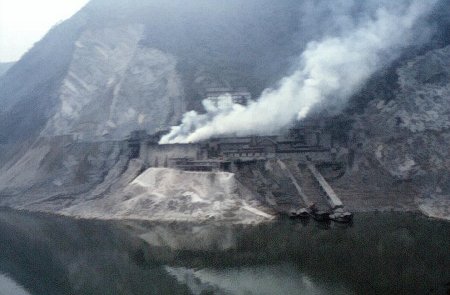
(0) comments

US soldier exposes Guantanamo abuse 

A former US military intelligence sergeant who worked on interrogations at Guantanamo Bay has written a damning expose of the brutal, degrading treatment he says was meted out to prisoners there.

Sergeant Erik Saar's book, Inside the Wire, comes with the US military's treatment of prisoners in the spotlight due to court hearings over the Abu Ghraib prison scandal.

'Does that please Allah?'

One of the most disturbing interrogations Sgt Saar says he saw in his six months at the prison concerned a female interrogator trying to break a Saudi detainee, captured after enrolling in a US flight school.

He tells how she began peeling off her clothes, taunting the man sexually in an attempt to shame him and stop him relying on his faith for support.

She left the interrogation room, Sgt Saar says, and found a red marker pen.

"'Brooke' came back round his [the prisoner's] other side, and he could see that she was beginning to withdraw her hand from her pants," said Sgt Saar.

"As it became visible, the Saudi saw what looked like red blood on her hand."

When the interrogator wiped what he thought was menstrual blood on his face, the prisoner raged, almost breaking free from his handcuffs.

But "Brooke" taunted him further, said Erik Saar, asking whether Allah would be pleased with him and telling him to have fun trying to pray.

Finally the detainee was returned to his cell without water, leaving him unable to cleanse himself.

For full story, click here.

Inside the Wire: A Military Intelligence Soldier's Eyewitness Account of Life at Guantanamo by Erik Saar and Viveca Novak is published in the United States by The Penguin Press.

Book Description
Inside the Wire is a gripping portrait of one soldier's six months at the terrorist detention center at Guantanamo Bay, Cuba - a powerful, searing journey into a surreal world completely unique in the American experience.

In an explosive newsbreak that generated headlines all around the world, a document submitted by army Sergeant Erik Saar to the Pentagon for clearance was leaked to the Associated Press in January, 2005. His account of appalling sexual interrogation tactics used on detainees at Guantanamo Bay was shocking, but that was only one small part of the story of what he saw at Guantanamo -- and the leak was only one more strange twist in his profoundly disturbing and life-changing trip behind the scenes of America's war on terror.

Saar couldn't have been more eager to get to Gitmo. After two years in the army learning Arabic, becoming a military intelligence linguist, he pounced on the chance to apply his new skills to extracting crucial intelligence from the terrorists. But when he walked through the heavily guarded, double-locked and double-gated fence line surrounding Camp Delta -- the special facility built for the "worst of the worst" al Qaeda and Taliban suspects - he entered a bizarre world that defied everything he'd expected, belied a great deal of what the Pentagon has claimed, and defiled the most cherished values of American life.

In this powerful account, he takes us inside the cell blocks and interrogation rooms, face-to-face with the captives. Suicide attempts abound. Storm-trooper-like IRF (initial reaction forces) teams ramp up for beatings of the captives, and even injure one American soldier so badly in a mock drill -- a training exercise - that he ends up with brain seizures. Fake interrogations are staged when General Geoffrey Miller - whose later role in the Abu Ghraib fiasco would raise so many questions - hosts visiting VIPs. Barely trained interrogators begin applying their "creativity" when new, less restrictive rules are issued by Secretary of Defense Donald Rumsfeld.

When Saar takes over as a co-supervisor of the linguists translating for interrogations and gains access to the detainees' intelligence files, he must contend with the extent of the deceptions and the harsh reality of just how ill-conceived and counter-productive an operation in the war on terror, and in the history of American military engagement, the Guantanamo detention center is.

Inside the Wire is one of those rare and unforgettable eyewitness accounts of a momentous and deeply sobering chapter in American history, and a powerful cautionary tale about the risks of defaming the very values we are fighting for as we wage the war on terror.

About the Authors
Erik R. Saar served as an army sergeant with the U.S. military in the Detainee Camp at Guantanamo Bay, Cuba for six months from December 2002 to June 2003, working to support the intelligence and interrogation operations. Sergeant Saar is a recipient of two Good Conduct Medals, an Army Commendation Medal, a Joint Service Commendation Medal, and a Joint Service Achievement Medal. He was trained in Arabic at the Defense Language Institute in Monterey, CA. Before serving at Gitmo, he worked as an intelligence analyst for the National Security Agency at Fort Meade, MD, and for the FBI in New York City. He is a graduate of King's College in Wilkes-Barre, PA.

Viveca Novak is a Washington correspondent for Time, covering legal affairs, terrorism, and civil liberties, among other issues. A recipient of Harvard University's Goldsmith Prize for investigative reporting, the Clarion Award for investigative reporting, and the Investigative Reporters and Editors Award, she is a frequent guest on the national broadcast media, including CNN, NBC, PBS, Fox, and MSNBC. She has a B.A. in foreign affairs from the University of Virginia, an M.S. from Columbia University School of Journalism, and an M.S.L. from Yale Law School.

Copyright 2003-2006 Azlan Adnan Legal Notice

(0) comments

Kofi Annan backs Guantanamo Bay closure 

"But the basic point, that one cannot detain individuals in perpetuity and that charges have to be brought against them and be given a chance to explain themselves, and be prosecuted, charged or released, I think is something that is common under any legal system. And I think sooner or later there will be a need to close Guantanamo. I think it will be up to the government to decide, and hopefully to do it as soon as is possible."

~ Secretary-General Kofi Annan's Remarks at Press Encounter Following Monthly Luncheon with Security Council Members
New York, 16 February 2006

Copyright 2003-2006 Azlan Adnan Legal Notice

(0) comments

Toxic French ship off the Malaysian coast for months 

Dhaka bans 'toxic' French liner

Bangladesh says it has imposed a ban on SS Norway, an asbestos-lined French ocean-liner, from being broken in its ship-breaking yards.

Environment Minister Tariqul Islam made the decision after a meeting with officials and environment groups.

The ban comes a day after France ordered another asbestos-lined carrier, Clemenceau, to return from its journey to a ship-breaking yard in India.

Environmental group Greenpeace says the SS Norway was on its toxic ships list.

SS Norway, which was launched in 1960 as SS France, has been anchored for months off the Malaysian coast waiting for a buyer.

'Health disaster'

Mr Islam said that the central bank and the customs department have been ordered not to issue an import order for the ship.

The navy and coastguard have also been ordered to keep the ship out of Bangladeshi waters.

"We have decided to ban the ship from entering our waters as we have information that it could trigger environmental and health disaster if it is dismantled here," Mr Islam said.

A Bangladeshi scrap merchant, Haji Lokman Hossain, said he had bought the 11-storey ocean-liner for $12m from an Indian buyer and that he was waiting for payment.

Although Mr Hossain said that he was surprised by the government's ban, he will not be contesting the decision in the courts.

"I do not want to fight the government about the ship. But I am surprised and shocked because [you will see] if you visit the scrap yards in Sitakundu [near Chittagong] some asbestos-laden ships are being scrapped there," he told the AFP news agency.

Environmentalists have welcomed the ban. Earlier they had given a legal notice to the government to stop the asbestos-lined ship from being imported.

Greenpeace has included SS Norway on a watch-list of 50 ships, which it fears will not be decontaminated before being dismantled.

It says the French workers who built the ship claim that it has 1,250 tonnes of material which containing asbestos.

Story from BBC NEWS:
http://news.bbc.co.uk/go/pr/fr/-/2/hi/south_asia/4720918.stm

Published: 2006/02/16 16:22:34 GMT

BBC MMVI

(0) comments

Amnesty welcomes UN call to close Guantanamo Bay 

~ but it is tip of iceberg

Amnesty International welcomes today's United Nations report calling for the closure of the US military detention centre at Guant‡namo Bay and urges governments, human rights defenders and its members around the world to send a clear message to the US government that it is time for Guant‡namo to go.

The UN experts also concluded that interrogation techniques authorized for use at the facility violate the Convention against Torture; that international human rights law is applicable to the facility and that the US is obliged to either bring the detainees to trial under US law or release them.

Susan Lee, Director of Amnesty InternationalÕs Americas Programme said: "The report confirms concerns which AI has repeatedly raised with the US government. We have consistently called for the detention facility at Guant‡namo Bay to be closed. The US can no longer make the case, morally or legally, for keeping it open.Ó

Guant‡namo Bay is just the tip of the iceberg. The United States also operates detention facilities at Bagram Airbase in Afghanistan, Abu Ghraib and elsewhere in Iraq and has been implicated in the use of secret detention facilities in other countries, also known as 'black sites'.

All these facilities, including Guant‡namo Bay, must be opened to independent scrutiny. All detainees should have access to the courts and should be treated humanely. These are basic principles that cannot be overridden even in time of war or national emergency.

To date the US has rejected any independent inquiry into its overseas detention facilities, nor has Washington been prepared to cooperate with a Council of Europe investigation into 'rendition' of terrorism suspects.

The selective disregard for international law by the United States in the context of the 'war on terror' has enormous influence over the rest of the world. When the US commits serious human rights violations it sends a signal to abusive governments that these practices are permissible. This is why Guant‡namo Bay is so important: it tells other governments that they can commit human rights violations in the name of counter-terrorism too.

Public Document
****************************************
For more information please call Amnesty International's press office in London, UK, on +44 20 7413 5566
Amnesty International, 1 Easton St., London WC1X 0DW.
web: http://www.amnesty.org

For latest human rights news view http://news.amnesty.org

AI Index: AMR 51/029/2006
16 February 2006

Copyright 2003-2006 Azlan Adnan Legal Notice

(0) comments

Thursday, February 16, 2006

UN: Guantanamo Bay is a concentration camp 

UN calls for closure of Guantanamo Bay
The UN's human rights commission calls for the immediate closure of the Guantanamo Bay concentration camp.

Treatment of detainees at Guantanamo Bay constitutes torture in some cases and violates international law, a UN report says.

HUMAN RIGHTS EXPERTS ISSUE JOINT REPORT
ON SITUATION OF DETAINEES IN GUANTANAMO BAY


16 February 2006

The following statement was issued today by the Chairman Rapporteur of the Working Group on Arbitrary Detention, Leila Zerrougui; Special Rapporteur on the independence of judges and lawyers, Leandro Despouy; the Special Rapporteur on torture and other cruel, inhuman or degrading treatment or punishment, Manfred Nowak; the Special Rapporteur on freedom of religion or belief, Asma Jahangir, and the Special Rapporteur on the right of everyone to the enjoyment of the highest attainable standard of physical and mental health, Paul Hunt:

Five independent investigators of the United Nations Commission on Human Rights are calling on the United States to close immediately the detention centre in Guant‡namo Bay and bring all detainees before an independent and competent tribunal or release them.

The call comes in a report published today following an 18-month joint study by the experts into the situation of detainees at that United States Naval Base. The report's findings are based on information from the United States Government, interviews conducted by the experts with former Guant‡namo Bay detainees currently residing or detained in France, Spain and the United Kingdom and responses from lawyers acting on behalf of some current detainees. It also relies on information available in the public domain, including reports prepared by non-governmental organizations (NGOs), information contained in declassified official United States documents and media reports. The experts expressed regret that the Government did not allow them the opportunity to have free access to detainees in Guantanamo Bay and carry out private interviews, as provided by the terms of reference accepted by all countries they visit.

The five experts Ð specializing in issues related to arbitrary detention, freedom of religion, the right to health, torture and the independence of judges and lawyers Ð conclude that the persons held at Guant‡namo Bay are entitled to challenge the legality of their detention before a judicial body and to obtain release if detention is found to lack a proper legal basis. The continuing detention of all persons held at Guant‡namo Bay amounts to arbitrary detention, they state, adding that Ð where criminal proceedings are initiated against a detainee Ð the executive branch of the United States Government operates as judge, prosecutor and defence counsel in violation of various guarantees of the right to a fair trial.

According to the experts, attempts by the United States Administration to redefine "torture" in the framework of the struggle against terrorism in order to allow certain interrogation techniques that would not be permitted under the internationally accepted definition of torture are of utmost concern. The confusion with regard to authorized and unauthorized interrogation techniques over the last years is particularly alarming. The interrogation techniques authorized by the Department of Defense, particularly if used simultaneously, amount to degrading treatment. If in individual cases, which were described in interviews, the victim experienced severe pain or suffering, these acts amounted to torture as defined in article 1 of the Convention against Torture. Furthermore, the general conditions of detention, in particular the uncertainty about the length of detention and prolonged solitary confinement, amount to inhuman treatment and to a violation of the right to health as well as a violation of the right of detainees to be treated with humanity and with respect for the inherent dignity of the human person. They add that force-feeding of competent detainees violates the right to health as well as the ethical duties of any health professionals who may be involved.

Among their recommendations, the experts say terrorism suspects should be detained in accordance with criminal procedure that respects the safeguards enshrined in relevant international law. Accordingly, the United States Government should either expeditiously bring all Guant‡namo Bay detainees to trial or release them without further delay. They also call on the Government to close down the Guant‡namo Bay detention centre and to refrain from any practice amounting to torture or cruel, inhuman or degrading treatment, discrimination on the basis of religion, and violations of the rights to health and freedom of religion. The investigators also request full and unrestricted access to the Guant‡namo Bay facilities, including private interviews with detainees. Consideration should also be given to trying suspected terrorists before a competent international tribunal.

Chronology leading up to report:

The five mandate holders have been following the situation of detainees held at the United States Naval Base at Guant‡namo Bay since January 2002. In June 2004, the Annual Meeting of special rapporteurs/representatives, experts and chairpersons of working groups of the special procedures and the advisory services programme of the Commission on Human Rights, decided that they should continue this task as a group because the situation concerns each of their mandates.

In studying the situation, they have continuously sought the cooperation of the United States authorities. They sent a number of letters requesting the United States Government to allow them to visit Guant‡namo Bay in order to gather first hand information from the prisoners themselves. By letter dated 28 October 2005, the Government of the United States of America extended an invitation for a one-day visit to three of the five mandate holders, inviting them "to visit the Department of Defense's detention facilities [of Guant‡namo Bay]". The invitation stipulated that "the visit will not include private interviews or visits with detainees". In their response to the Government dated 31 October 2005, the mandate holders accepted the invitation, including the short duration of the visit and the fact that only three of them were permitted access, and informed the US Government that the visit was to be carried out on 6 December 2005. However, they did not accept the exclusion of private interviews with detainees, as that would contravene the terms of reference for fact-findings missions by special procedures and undermine the purpose of an objective and fair assessment of the situation of detainees held in Guant‡namo Bay. In the absence of assurances from the Government that it would comply with the terms of reference, the mandate holders decided on 18 November 2005 to cancel the visit.

P.S.
For use of information media; not an official record

Click here to download the full report in pdf format.

Copyright 2003-2006 Azlan Adnan Legal Notice

(0) comments

Recent Israeli atrocities 

A 20-year-old Palestinian man with learning disabilities has been shot dead by Israeli troops near the West Bank town of Jenin.

A 12-year-old boy was shot dead in the Jenin refugee camp three months ago during a stone-throwing protest.

On Monday 13 February 2006, Israeli troops shot and killed a 25-year-old Gaza woman near the border fence between the territory and Israel.


While Ariel Sharon lingers on after emergency surgery, his son Omri has been jailed for corruption.

Copyright 2003-2006 Azlan Adnan Legal Notice

(0) comments

US mining giant pays for polluting 

The US mining giant Newmont has agreed to pay Indonesia US$30 million in an out of court settlement over alleged pollution in North Sulawesi.

The Indonesian authorities claim residents on an island in North Sulawesi province, about 1,300 miles north east of Jakarta, have suffered serious skin diseases and neurological disorders after being exposed to abnormally high levels of heavy metals including toxic mercury and arsenic.

Newmont Mining Corporation share prices dropped 34 cents to close at US$54.82 yesterday.

Copyright 2003-2006 Azlan Adnan Legal Notice

(0) comments

US torture in Iraq 

The images are, as the US state department's legal adviser puts it, "disgusting." Chained, terrified and humiliated Iraqis people the photographs.

US Defence Secretary Donald Rumsfeld admitted they showed scenes that were "blatantly sadistic, cruel and inhuman."

The new images show worse abuse than those released earlier.

One man - apparently deranged - slams his head against a wall while a video camera runs.

Detainees are forced to perform sexual acts. A young girl holds up her shirt, bearing her breasts for the soldier's camera.

A man stands naked and smeared with excrement.

These new images seem to depict abuse worse than anything we had already seen.

They imply much greater violence. Empty cells inexplicably spattered with blood, a man with a serious gash across his throat, another with blood leaking from a head wound, corpses, a torso dotted with small circular wounds - are they cigarette burns?

A few of the images appear to have taken for medical purposes. Most do not.

They are all fresh and awful reminders of what happened in Abu Ghraib prison in 2003.

The images appear to come from the CD compiled by one of the perpetrators, Corporal Charles Graner. Graner had given the CD as a souvenir to a colleague, military policeman Joseph Darby, and Darby, horrified at what he saw, handed it in.

For more details, click here.

Click here for the photographic evidence.
WARNING:
You will find these images disturbing, distressing or offensive!
This is torture was conducted by the great US of A, the same asses that talk so much about human rights.

BTW, Dick Cheney is really stupid. If he had any brains, he would have shot the Shrub!

Copyright 2003-2006 Azlan Adnan Legal Notice

(0) comments

Saturday, February 11, 2006

Pak Lah speaks out 

Oleh/By : DATO' SERI ABDULLAH BIN HAJI AHMAD BADAWI
Tempat/Venue : SHANGRI LA, KUALA LUMPUR
Tarikh/Date : 10/02/2006
Tajuk/Title : KEYNOTE ADDRESS BY THE HONOURABLE ABDULLAH AHMAD BADAWI, PRIME MINISTER OF MALAYSIA AT THE INTERNATIONAL CONFERENCE "WHO SPEAKS FOR ISLAM? WHO SPEAKS FOR THE WEST?"


KEYNOTE ADDRESS
BY THE HONOURABLE
ABDULLAH AHMAD BADAWI,
PRIME MINISTER OF MALAYSIA
AT THE INTERNATIONAL CONFERENCE
"WHO SPEAKS FOR ISLAM?
WHO SPEAKS FOR THE WEST?"
10 FEBRUARY 2006,
SHANGRI LA, KUALA LUMPUR


Excellencies
Distinguished guests
Ladies and gentlemen

Assalamualaikum warahmatullahi wabarakatuh
and good morning.

It is a real delight for me to see so many renowned scholars and thinkers assembled in Kuala Lumpur to discuss such a pertinent issue as who speaks for Islam and who speaks for the West. It is auspicious that this dialogue begins on a Friday, which is observed by Muslims everywhere, every week, as a special day. To those of you who have come from afar, I bid you a very warm welcome. I do hope that your stay in Malaysia will be both pleasant and rewarding.

2. The two questions: "Who Speaks for Islam? and Who Speaks for the West?" are amongst the most fundamental issues in the interface between two great civilizations - the Islamic World and the Christian West. Their answers are not only important in determining the relationship between Islam and the West but are also vital in shaping the future of humankind because Christians and Muslims make up at least half of the world's people. There are 2039 million Christians accounting for 32% of the world's population and there are 1226 million Muslims making up 19% of the total.

3. When we ask you to search for the answers to the two questions, it is not our intention to point fingers at any religion nor to apportion blame on anyone regarding the state of affairs which now exist between the Islamic World and the West. What we seek is the truth which can serve the best interests of all humankind, and help bring peace to this troubled world of ours. Let us pray to God the Almighty, so that He gives us wisdom, courage and determination to discover the answers.

4. I do not suggest for a moment that "Islam" or the "West" are monolithic entities. There is tremendous heterogeneity in both civilizations. Both manifest diverse and sometimes contradictory trends and tendencies. Having made that clarification, allow me to continue to speak of Islam and the West in the way they are normally understood.

5. Let me say at the outset that while there are a multitude of voices that speak on behalf of Islam on the one hand, and the West on the other, there are certain voices, which I feel, do not do justice to either Islam or the West.

6. I hold the strong view that, in the case of Islam, those who deliberately kill non-combatants and the innocent; those who oppress and exploit others; those who are corrupt and greedy; those who are chauvinistic and communal, do not speak on behalf of Islam.

7. In the case of the West, I do not regard them as defenders of Western civilization those who invade and occupy someone else's land; those who systematically cause innocent children, women and men to be killed; those who oppress other people and exploit their resources for their own selfish ends; or those who are racist in outlook and bigoted in their religious beliefs. Anyone who seeks to dominate and control, who attempts to establish global hegemony, cannot claim to be spreading freedom and equality at the same time.

8. Who then speaks for Islam? Who then speaks for the West? The Noble Quran speaks for Islam. At its core is an eternal message of justice and compassion, of equality and humanity, of peace and solidarity. There is, besides, the Prophet's exemplary life and mission which reflect the quintessence of Islam. Through their struggles and sacrifices, the illustrious caliphs from Abu Bakr to Salahuddin Al-Ayubi (Saladin) also succeeded in bringing to the fore the authentic face of the religion.

9. In a sense, the great accomplishments of Muslim civilization - in science and medicine as in agriculture and architecture - served to enhance the image of Islam. The scholars who were responsible for these accomplishments such as Al-Kwarizmi and Ibn Sina should be regarded as the true voices of the religion.

10. It follows from this that in the contemporary world, it is those who uphold justice, who fight tyranny, who seek liberation from oppression, who are honest and upright, who are universal and inclusive in word and deed, are the ones who represent the real message of Islam.

11. One should also add that those who protect the rights of the human being, those who treasure the dignity of women and the welfare of children, those who preserve the integrity of the family, those who help the poor and feed the hungry, those who live in harmony with the environment, are also speaking on behalf of Islam.

12. In a nutshell, all Muslims anywhere who sincerely endeavor to live according to the universal values and principles of the Quran are the true spokespersons of Islam. What this means is that the overwhelming majority of Muslims, who by and large lead decent lives, are already speaking for the religion.

13. To express the principles of life that are important to ordinary Muslims as demonstrated in Islamic civilization, I have personally sought to promote an approach which I call "Islam Hadhari" which we have defined as "a comprehensive approach to the development of mankind, society and country based on the perspective of Islamic civilization". The 10 principles of Islam Hadhari embody universal values which have endowed the religion with strength and character through the ages. The ten principles are, namely :

I. Faith and piety in Allah;
ii. A just and trustworthy government;
iii. A free and independent people;
iv. A vigorous pursuit and mastery of knowledge;
v. A balanced and comprehensive economic development;
vi. A good quality of life for the people;
vii. The protection of the rights of minority groups and women;
viii. Cultural and moral integrity;
ix. The safeguarding of natural resources and the environment;
x. Strong defense capabilities

14. I consider this fresh approach as a necessary part of the reform and renewal that is needed in Islamic countries and in Muslim societies as a whole. Malaysia feels that it is well placed to begin this journey of reform and renewal because it is a multi-racial and multi-religious country in which we treat our diversity as an asset to be nurtured. In fact, we are merely building upon the tolerance we have observed and the inter-faith co-existence which we have practised in the country for decades. We wish to show by example that a Muslim country can be modern, economically competitive, democratic and fair to all its citizens irrespective of their religions.

15. Islam Hadhari is not a new religion or mazhab. It is not a new ideology. It is not meant to pacify the West. It is neither an approach to apologize for the perceived Islamic threat nor an approach to seek approval for a more friendly and gentle image of Islam. It is the way for practising the religion in these modern times but firmly rooted in the noble values and injunctions of Islam.

16. Islam Hadhari is what Muslims should emphasize in the contemporary world, the pursuit of knowledge being one of the most fundamental. It is another way of saying that there are certain civilizational principles in the religion whose realization will bring greatness and glory to the Muslim Community, the Ummah, today, just as they had propelled the Islamic civilization to such splendour and magnificence in the past.

17. Western civilization too has its share of greatness and majestic accomplishments. We must acknowledge that in the West, principles such as freedom and equality have found concrete expression in the rule of law, public accountability, acceptance of political dissent and respect for popular participation. We must also acknowledge that many great statesmen and reformers of the past made sterling efforts to redistribute wealth, to equalize opportunities and to achieve equity and social justice. They may be regarded as the true spokespersons of the West. Admittedly, the West is also the civilization that has given birth to a whole host of scientists and researchers, from Newton to Einstein on the one hand, and from Marie Curie to Alexander Fleming, on the other, who have contributed immensely to the well-being of humankind.

18. However, for a lot of Muslims today, this is not the face of the West that they see. It is the hegemony of the centers of power in the West that is most visible to them. They see the subjugation of Palestine as an indirect concretization of this hegemony. They see hegemony manifested directly in the attack upon Afghanistan and in the occupation of Iraq. These are some of the realities which confront the Muslim masses today.

19. Of course, there are other manifestations of hegemonic power which have also made a deep impression upon the Muslim mind. These include foreign military bases in Muslim countries; the dominant presence of huge Western corporations; the pervasive impact of currency markets; the ever expanding security tentacles of the super-power; plus certain negative traits and influence of western culture and ideas.

20. At the popular level, the West is perceived as "biased" against Islam and the Muslims. Muslims feel, rightly or wrongly, that they have become the victims of double standards and selective persecution. More specifically, Muslims see those responsible for the devastation of Jenin and Fallujah, and the humiliation of Abu Ghraib and Guantanamo, as the ugly face of the West that speak for the West.

21. Similarly, many in the West see Islam as synonymous with violence. The Muslim is viewed as a congenital terrorist. They think Osama bin Laden speaks for the religion and its followers. Islam and Muslims are linked to all that is negative and backward. For example, Muslim men, it is alleged, oppress their wives. Women it is said, have no rights in Islam. Some so-called Western "experts" on Islam argue that Muslims invariably discriminate against non-Muslims. They say Muslims are intolerant. They say Islam is incompatible with democracy and modernity. The demonization of Islam and the vilification of Muslims, there is no denying, is widespread within mainstream Western society.

22 It is the duty of all people of goodwill to work hard to change these negative perceptions on both sides of the divide. Undoubtedly, the task is not going to be easy. For these perceptions have deep roots. Since the advent of Islam at the beginning of the 7th century, Christian, and to a lesser degree, Jewish antipathy towards the religion and its Prophet, Muhammad, has grown into active antagonism. The crusades, Western colonialism, the imposition of Israel upon the Arab world, post-colonial hegemony and the Western desire to control oil and gas, especially those supplies coming from the Muslim countries, have all contributed in one way or another to the huge chasm that has emerged between the West and Islam. The targeting of so-called "Islamic terrorists" in the global fight against terrorism aggravated the situation and the senseless violence of the terrorists themselves has made things worse.

23. Quite clearly, we will not be able to change the situation by mere talk, dialogue and being nice to one another. We must be brave enough, and we must be honest enough, to admit that as long as there is hegemony, as long as one side attempts to control and dominate the other, the animosity and antagonism between the two civilizations will continue. This is why hegemony must end. Mutual respect for one another should replace hegemony. Reciprocity should become the ethical principle that conditions relations between the West and Islam. The West should treat Islam the way it wants Islam to treat the West and vice versa. They should accept one another as equals. Respect, reciprocity and equality: these are the essential prerequisites for a happy and harmonious relationship between the two civilizations.

24. It is significant that in both civilizations, there exist men and women today who are working towards a genuine transformation in relations, which will bring to an end the animosity and antagonism of the past and the present.

25. There are many in the West for instance who realize that the exercise of hegemonic power and the demonization of Islam are not conducive for inter-civilizational peace. It is these voices that the world should listen to. Likewise, there are numerous groups and individuals in the Muslim world who are deeply distressed by the violence and terror perpetrated by certain fringe groups within the Ummah, just as they are equally uncomfortable with the sweeping denunciations of Christians, Jews and the West. They do oppose hegemony and occupation but their words are authentic voices of Islam.

26. Certain voices, both in the West and in the Muslim world, are not given the prominence they deserve. The mainstream media should give much more attention to them. It is only too apparent that these two groups - one in the West and the other in the Muslim world - share a common perspective on some of the critical challenges facing both civilizations and the world at large. Both are opposed to hegemony. Both reject violence and terror. Both yearn for a just and peaceful world. Both are united by a common bond. It is this common bond that makes them bridge-builders.

27. It is such fine men and women who are capable of reaching out to one another, who are willing to transcend the civilizational divide, that we need badly at this juncture in history. It is a pity that there are not enough of them. One of our most urgent tasks is to multiply the bridge-builders. We must develop through the family, through education and the media tens of thousands of men and women who can be critical of the weaknesses and wrongdoings of one's civilization and, at the same time, are empathetic towards "the other" civilization. When the bridge-builders reach a critical mass, their collective power would become so overwhelming that it would destroy the walls erected by those who are hell bent on keeping Islam and the West apart.

28. At that point, when the bridge-builders reign supreme, the people of the West will speak for Islam and the Muslims will speak for the West.

Ladies and Gentlemen,

29. Let us start now by curbing the extremists in our midst. We must put a stop to the mockery of any religion or the sacrilege of any symbol held sacred by the faithful. Let us not underestimate the power of religion as an imperative for people to act. In the face of fanaticism and hysteria, we must take action to counsel moderation and rationality.

30. On that note, let me conclude by congratulating the Malaysian "Institute of Diplomacy and Foreign Relations" and "Dialogues: Islamic World - U.S - the West" for organizing this very important conference and for bringing together to Malaysia a prominent group of people who are serious about the subject of dialogue between civilizations. I would like to propose that this Conference be held as an annual event. A dialogue such as this can serve as a Confidence Building Measure.

31. For those who have come from abroad, I invite you to take this opportunity to look around you and witness for yourself the Malaysia that you might have heard of. I hope you will be able to bear witness to our efforts at nation-building in which inter-faith and inter-ethnic harmony lies at the core of our national development programme.

Thank you.

Copyright 2003-2006 Azlan Adnan Legal Notice

(4) comments

Tuesday, February 07, 2006

Farid behaving strangely 

Farid Evades Queries on RM1 Billion Donation Pledge

PENANG, Feb 6 (Bernama) -- The question of whether the National Cancer Council (Makna) has received a donation of RM1 billion from self-proclaimed Lebanese "billionaire" Elie Yousef Najem remains unanswered.

Makna chairman Datuk Farid Ariffin would not confirm if the money pledged by Elie had been deposited in the council's account.

"Don't ask me anything, I don't know about it. Cancer patients will continue to pray that Elie will fulfil his pledge," he told reporters in Penang on Monday.

"I have not been in contact with anyone for the last several days as I had switched off my handphone. With Elie too, I have not been in touch the past four days," he said.


What a strange thing to say!
Why can't he just say he hasn't received the money yet?
Why does he have to switch off his handphone?
How can the chairman of an NGO just deny knowing anything?
Don't you think something doesn't add up?

Copyright 2003-2006 Azlan Adnan Legal Notice

(0) comments

Sarawak's Sunday Tribune apologises 

The Sunday Tribune newspaper in Sarawak has apologised and expressed "profound regret over the unauthorised publication" of one of the Danish newspaper caricatures of Prophet Muhammad.

Full story here and here.

Copyright 2003-2006 Azlan Adnan Legal Notice

(0) comments

Monday, February 06, 2006

Islam and Freedom of Thought 

"What was once an occasional event -- silencing scholars -- increasingly has become a way of life in most Muslim countries. From South Asia to North Africa, an entire generation of Muslim intellectuals is at this moment under threat: Many have already been killed, silenced, or forced into exile."

By Akbar S. Ahmed and Lawrence Rosen

As America and its allies have set about building coalitions that include many of the Islamic nations, it is easy to lose sight of the issue of intellectual freedom within the Muslim world. While the safety of Western countries may depend on alliances with other regimes, those alliances should not come at the price of abandoning scholars and intellectuals in the Middle East, whose ability to speak out is no less under attack, often by these same governments. Our concern is that scholars in Muslim countries will be overlooked in the rush to forge expedient alliances.

The image shown to the world on the cover of the June 17, 2001, New York Times Magazine, of Saad Eddin Ibrahim, a respected Egyptian sociologist, caged and on trial for the exercise of his intellectual freedom, ought to send a chill through both the Muslim world and the West. Before his arrest for alleged homosexuality, embezzlement, and spying for the United States and Israel, he was conducting research on Cairo voters' sentiments about why Muslims join militant groups. From South Asia to North Africa, an entire generation of Muslim intellectuals is at this moment under threat: Many have already been killed, silenced, or forced into exile.

Consider Pakistan. The late nuclear physicist Abdus Salam, Pakistan's only Nobel laureate, was pressured to leave early in his career, in the late 1950s, because he belonged to a sect not recognized by most Pakistani Muslims. Fazlur Rahman, instrumental in starting Islamic studies at the University of Chicago in the late '60s, was chased out earlier in that decade by Islamic religious parties.

There is considerable irony in the fact that Pakistan's record in relation to freedom of thought is not good, given the nature of its founder, Mohammed Ali Jinnah. Jinnah believed in human rights, women's rights, minority rights, and the rule of law. Along with his followers, he hoped to create a modern Muslim nation, one that would respect Islamic tradition but at the same time be part of a modern community of nations.

Jinnah so respected women's rights that he insisted that his sister, Fatima Jinnah, be with him publicly in his struggle for the creation of Pakistan in 1947. Fatima Jinnah herself became a role model for women. And Jinnah deeply loved his wife, Ruttie, who was a non-Muslim (and half his age), and his only child, Dina, who, as a young woman, refused to marry a Muslim. The women in Jinnah's family thus created problems for those who wished to portray Jinnah as a straightforward religious extremist.

That view of Jinnah was pushed most strongly after General Zia-ul-Haq took power in 1977 through a military coup and launched a campaign to "Islamize" Pakistan. But how do you explain a wife who is not a Muslim, and a daughter who refused to marry a Muslim? The historian Sharif al-Mujahid -- whose 1981 biography of Jinnah, Quaid-i-Azam Jinnah, is perhaps the best known in Pakistan -- did not mention either woman in his 806-page volume. Nor do Pakistan's official archives, pictorial exhibitions, or official publications contain more than a picture or two of them.

To portray the real Jinnah, Akbar Ahmed, one of the authors of this essay, along with several friends and colleagues, spent the 1990s on several related projects, which came to be called the Jinnah Quartet. They included the feature film Jinnah (released in English and Urdu in 2000); a television documentary, Mr. Jinnah -- The Making of Pakistan (released in 1997); an academic book called Jinnah, Pakistan and Islamic Identity: The Search for Saladin (published by Routledge in 1997); and a graphic novel (published by Oxford University Press in 1997).

The Jinnah Quartet attempted to answer a crucial question about Muslim society that many scholars and intellectuals -- Muslims and non-Muslims alike -- are asking in their respective countries: Can Muslim countries produce moderate leaders? Do Muslims have leaders who care for human rights, women's rights, minority rights, and the sanctity of law, and who can lead their nations to the international community with honor? The authors of the quartet believe that Jinnah was one such leader who provides a relevant, contemporary model. The Jinnah Quartet attempted not only to challenge images and ideas of the last days of the British Raj, but also communicate ideas about leadership, the nature of the Islamic state, and the compassionate and tolerant nature of Islam.

The Jinnah Quartet project was controversial. Once the filming started in 1997 -- in England, where the author was living, and on location in Pakistan -- the Pakistani press and various political parties launched a disinformation campaign, claiming that Salman Rushdie had written the script for the film, or that it was part of a Hindu or a Zionist conspiracy.

While filming in Pakistan, the author and others involved in the project were verbally attacked and threatened by journalists and "concerned citizens," and important officials repeatedly warned them not to portray a tolerant Jinnah and the tolerant Islam he represented. Journalists demanded money to publish positive articles about the project or threatened to write slander; bureaucrats tried to stop the project through delays and denials of permissions necessary for filming. (Eventually, the government of Pakistan reneged on a written agreement and pulled out almost one-third of the budget it had committed during the shooting of the film.) The project was completed, and the film won several awards at international film festivals. But despite gratifying responses in the West, Africa, and even Pakistan, the Jinnah model appears to have failed in the Muslim world. Even those political leaders who believe in democracy, once in power, fall back on tyranny and corruption to stay in office.

Ordinary citizens have little idea that an indigenous democratic model is available to Muslim society, because the scholars and intellectuals who can articulate that vision are being silenced.

When Muslim scholars and intellectuals -- those who seek and foster knowledge -- are silenced, Muslim citizens are cut off from part of who they are. Islam places enormous emphasis on knowledge. It charges humans to use their God-given reason to better themselves and their dependents, and throughout history ordinary Muslims have cherished that expectation and the benefits such knowledge has produced. They appreciate the control that knowledge gives them over their destiny, the connections it allows them to form with people different from themselves, the insight it gives them into their faith, and the limits it may place on those who exercise power. For that multifarious search for knowledge to be jeopardized is to risk not only the loss of information but a crucial element of who Muslims know themselves to be.

We think of knowledge in this information age as readily accessible to all. When we see an Internet cafe in a dusty town of South Asia or a satellite dish hooked up to a car battery in the countryside of North Africa, we assume that authoritarian regimes can no longer control the flow of communication. But being hooked up and online may make it easier to know what is happening across the world than to know of events in the next town or district.

In many Muslim regimes, intelligence agencies with their own agendas and presidents who exercise their powers capriciously create a constant state of uncertainty that spreads well beyond the challenge of any one thinker's ideas or proposed reforms. When the scholar is silenced it is not useless knowledge that is lost: It is the sense that pursuing knowledge, wherever it may be found, is no longer part of the expression of God's will.

Pressures on intellectual freedom come from many sources.

Throughout much of the Muslim world, university students are among the most ardent fundamentalists, fueled by the literal interpretation of Islam taught at madrassahs (Muslim religious schools). The network of madrassahs in turn links up with religious political parties across national boundaries. In Muslim countries, madrassahs are seen as a legitimate Islamic alternative to unaffordable private schools patronized by the westernized elite.

Professors, particularly in the liberal arts, are often cowed by their own students into silence, both in their teaching and in their writing. Like some postmodernist gone mad, the student of literature may see fiction as nothing but the expression of the writer's politics, while the science student is not concerned with questioning fundamentals, but with applying technologies to religious and political ends.

The results for intellectuals range from a denial of the finest traditions of open debate to working in an environment of omnipresent threat. (In Islamabad, a professor at a medical college this year was found guilty of blasphemy and sentenced to death, after students complained about him to the local religious leader.) It is impossible to ignore the discrepancy between the Islamic emphasis on knowledge and the questionable climate for scholars and intellectuals in Muslim countries. Great scholars of the past, men like Ibn Khaldun, a 14th-century Arab historian; the 14th- century writer Ibn Battutah; and the 11th-century writer Abu Raihan Muhammad Al-Beruni may have made the rulers of their day uncomfortable, but they continued the Islamic tradition of the pursuit of knowledge for the benefit of all. That such renowned Muslim thinkers might today be placed in a cage or threatened with physical harm undermines the Islamic belief that any person may develop his or her intellect to the fullest, yielding a diminished and alienated sense of Islam itself.

Indeed, knowledge, for Muslims, is integral to justice, for how, from the Muslim perspective, is one to determine what balance is to be struck among alternatives if one lacks the knowledge to assess choices in the first place? How is one to attach oneself to reliable others if there is no way to tell how they comported themselves in other contexts or made use of the other connections they have forged? How, indeed, is one to achieve the Islamic ideal of knowledge if one is not free to inquire, probe, and appraise the world, for which Allah has told the believer he bears responsibility? When Abdus Salam needed to be protected by riot police on his first visit home after winning the Nobel Prize in 1979, when the co-author of this essay, on returning home after a year at the Institute for Advanced Study in Princeton, was asked by a Pakistani general, "Why have you returned home? We don't need scholars and intellectuals in Pakistan," when researchers like Professor Ibrahim must risk their freedom to publish a survey of voter sentiment, the loss to ordinary Muslims is far greater than each individual case may appear to suggest.

What was once an occasional event -- silencing scholars -- increasingly has become a way of life in most Muslim countries. Along with the appearance of open information -- access to e-mail and the Internet, for example -- in Muslim countries like Egypt and Indonesia has come a more intense denial of intellectual freedom than at any time in recent history. Large numbers of the educated middle class are trying to leave, or have already left, their home countries.

Their exit further weakens the equation of knowledge and Islamic virtue, leaving the field to those, like the followers of Osama bin Laden, who see injustice, but have stilled or lost the voices that could assess it in terms both objective and Islamic. The prophet Muhammad said, "The death of a scholar is the death of the universe." And the president of the American University of Beirut, Malcolm Kerr, gunned down in his office in 1984, once wrote: "If ideas are not available to shape events, then by default events will shape ideas, in keeping with their own unplanned and, perhaps, grotesque course." At a time when it is easy to ignore intellectual freedom while concentrating on combating terrorism, we must remember that only when Muslims have a full range of options freely and openly available to them can creative alternatives to extremism be entertained; only when we in the West support the same openness of thought in the Muslim world that we expect in our own societies can the hopes of ordinary people for improvement in their lives become the basis for a common bond. Saad Ibrahim remains behind bars in Egypt, the quiet American pressures to gain his release obscured by the needs of momentary alliance with that country's government.

If Ibrahim and others like him are, like truth itself, further casualties of a war on terrorism, the victory that will be gained will only fertilize the seeds of perpetual disaffection in Muslim countries and reinforce the image that Westerners are not concerned with freedom except for their own citizens. Meanwhile the lack of clarity and stability in Muslim society will further encourage those who interpret Islam to mean violence and anarchy.


This article first appeared in the November 2001 issue of The Chronicle of Higher Education.

Akbar S. Ahmed is a professor of Islamic studies at American University, a former high commissioner of Pakistan to the United Kingdom (1999-2000), and the author, most recently, of Islam Today: A Short Introduction to the Muslim World (I.B. Tauris, 1999).

Lawrence Rosen is the chairman of the anthropology department at Princeton University, an adjunct professor of law at Columbia Law School, and the author, most recently, of The Justice of Islam (Oxford University Press, 2000).

Copyright 2003-2006 Azlan Adnan Legal Notice

(0) comments

Hydrogen Fuel Technology 

Scientists Invent System Which Can Reduce Petrol Consumption by 50%

KUALA LUMPUR, Feb 4 (Bernama) -- A small group of scientists have invented a technology called Hydrogen Fuel Technology (HFT) which could reduce petrol consumption up to 50 percent.

Spokesperson for the scientists, Mohammad Isa Abdullah, said that the HFT system was designed to fit all types of cars with particular emphasis on national cars, namely Proton Perdana, Proton Waja, Proton Wira, Proton Iswara, Proton Saga and Perodua Kancil.

The prototype has been tested in Proton Waja for a period of over two years and Perodua Kancil for one month, he said at the launch of the HFT recently.

The HFT, developed by 10 scientists from the United Kindom, the US, Germany, Australia and led by Malaysian scientists, is based on nanotechnology that separates water into hydgrogen and oxygen.

The system is able to generate a fuel capacity of 20 litres (10 litres from petrol, 10 litres from water). For every 10 litres of petrol, the system uses 20 litres of water to generate a fuel capacity of 20 litres.

Mohammad Isa said that Proton Perdana would undergo the test from Feb 17 to 19.

He expects the commercial launch of the HFT to take place in July this year and would focus on the local market first before expanding to Indonesia, Philippines, Thailand, Australia and Sri Lanka in 2007.

-- BERNAMA

Copyright 2003-2006 Azlan Adnan Legal Notice

(0) comments

Kofi Annan urges end to violence 

Kofi Annan urges end to violence over controversial cartoons

5 February 2006 -- Reacting to attacks sparked by a furor over controversial cartoons first published in a Danish newspaper, United Nations Secretary-General Kofi Annan today said that while he shares the distress of offended Muslims, they must not respond with violence.


"The Secretary-General is alarmed by the threats and violence, including the attacks on embassies that have occurred in Syria and Lebanon and other countries over the past few days," his spokesman, Stephane Dujarric, said in a statement issued in New York.

Noting that Mr. Annan shares the distress felt by many Muslims at the publication of caricatures considered insulting to their religion, "he wishes to emphasize that such resentment cannot justify violence, least of all when directed at people who have no responsibility for, or control over, the publications in question."

The spokesman repeated Mr. Annan's urging that Muslims accept the apology given by the Danish newspaper, act in the "true spirit of a religion famed for its values of mercy and compassion," and put this episode behind them.

Through his spokesman, the Secretary-General also appealed to all parties, particularly governments and authorities "to do everything they can to reduce tension and to avoid actions or statements which might increase it."

"Now, more than ever, it is time for people of good will in all faiths and communities to come together in a spirit of dialogue and mutual respect," Mr. Dujarric said.

THE FULL TEXT
FROM UNITED NATIONS WEBSITE

New York, 5 February 2006 - Statement attributable to the Spokesman for the Secretary-General on violent reactions to caricatures of Prophet Muhammad


The Secretary-General is alarmed by the threats and violence, including the attacks on embassies, that have occurred in Syria and Lebanon and other countries over the past few days. While he shares the distress felt by many Muslims at the publication of caricatures which they see as insulting to their religion, he wishes to emphasize that such resentment cannot justify violence, least of all when directed at people who have no responsibility for, or control over, the publications in question.

Once again, he urges Muslims to accept the apology given by the Danish newspaper, to act in the true spirit of a religion famed for its values of mercy and compassion, and to put this episode behind them. He also appeals to all parties, particularly all governments and authorities, whether religious or secular, to do everything they can to reduce tension and to avoid actions or statements which might increase it. He believes that now, more than ever, it is time for people of good will in all faiths and communities to come together in a spirit of dialogue and mutual respect.

Copyright 2003-2006 Azlan Adnan Legal Notice

(0) comments

Pak Lah slams cartoon 'provocation' 

Malaysian PM slams cartoon 'provocation'

Malaysia's Prime Minister Abdullah Ahmad Badawi has sharply criticised the publication of caricatures of Prophet Muhammad in Western newspapers on Saturday 4 February 2006.

Abdullah, who chairs the 57-nation Organisation of the Islamic Conference, said the "deplorable act was a blatant disregard of Islamic sensitivities over the use of such images, which were particularly insulting to and forbidden by Islam."


Oleh/By: DATO' SERI ABDULLAH BIN HAJI AHMAD BADAWI
Tempat/Venue: OFFICE OF THE PRIME MINISTER OF MALAYSIA, PUTRAJAYA
Tarikh/Date: 04/02/2006
Tajuk/Title: THE PUBLICATION OF CARICATURES OF PROPHET MOHAMMED BY CERTAIN NEWSPAPERS AND JOURNALS IN EUROPE - [04/02/2006]

STATEMENT BY
THE HONOURABLE DATO SERI ABDULLAH AHMAD BADAWI
PRIME MINISTER OF MALAYSIA
ON THE PUBLICATION OF
CARICATURES OF PROPHET MOHAMMED
BY CERTAIN NEWSPAPERS AND JOURNALS IN EUROPE


Malaysia wishes to express its deepest regret over a defamatory caricature of Prophet Mohammed which was first published by a Danish newspaper. This deplorable act is a blatant disregard for Islamic sensitivities over the use of such images which are particularly insulting and forbidden by Islam.

It is even more regrettable that newspapers and journals in some other countries such as Norway, France, Germany, Belgium, Italy and Spain had seen fit to reproduce the offending caricatures despite worldwide protests against the publication of those images. This is a deliberate act of provocation. They should cease and desist from doing so.

I would however call upon the people of Malaysia to remain calm and rational. Let the perpetrators of the insult see the gravity of their own mistakes which only they themselves can and should correct.

Office of the Prime Minister of Malaysia
PUTRAJAYA

4 February 2006


The Vatican deplored the violence but said certain provocative forms of criticism were unacceptable. "The right to freedom of thought and expression cannot entail the right to offend the religious sentiment of believers," the Vatican said in its first statement on the controversy.

When contacted, National Evangelical Christian Fellowship (NECF) secretary-general Reverend Wong Kim Kong said that he supported the Malaysian Prime Minister's expression of regret over the incident.

"While others may regard the caricatures as trivial, for Muslims, to depict their prophet as such is abomination. It is only right for people to be more sensitive to the religion of others."

Likewise, the Malaysian Consultative Council deputy president K. Pardip said: "No one should have the right to ridicule the religion and beliefs of others."


PRESS RELEASE

The OIC secretary general exerts intensive efforts in the fall out of the escalating developments following the publication of the insulting caricatures of Prophet Mohammed (PBUH)

In the wake of the recent developments with regard to the disturbing incident of republishing by some European media organs of insulting caricatures of Prophet Mohammed (PBUH) following their first publication by the Danish daily Jyllands Posten, the General Secretariat of the Organization of the Islamic Conference has been conducting intensive efforts with a view to curbing the dangerous escalation which is being witnessed recently and to coming up with consensus at the international level which will help prevent the reoccurrence of similar incidents.

In the framework of this intensive efforts, the OIC Secretary General Professor Ihsanoglu held telephone contacts yesterday (4 February) with H.R.H Prince Saud Al Faisal, Minister of Foreign Affairs of the Kingdom of Saudi Arabia and H.E. Mr. Abu Bakr Al Qurbi, Minister of Foreign Affairs of Yemen, to exchange views on the developments as well as regarding the calls to have an extraordinary session of the Islamic Conference of Foreign Ministers to discuss the matter. On the same subject, Prof. Ihsanoglu has received a call today from H.E. Mr. Mohammed Abdel Rahman Shalgam, Minister of Foreign Affairs of Libya.

Prof. Ihsanoglu also received last night a telephone call from the UN Secretary General Mr. Kofi Annan who said he shared the distress of the Muslims who felt that the caricatures offended their religion and that although he respected the right of freedom of speech, freedom of speech should entail responsibility and judgment. UN Secretary General also voiced his concerns with the developments and offered his assistance in finding a peaceful way out without inflaming the already difficult situation. The two Secretaries General then exchanged views on what can be done in the UN framework to develop an international code of conduct and further the already existing efforts.

As it would be remembered, Prof. Ihsanoglu had also received a telephone call in the evening of 2 February from Mr. Javier Solana, the European Union's High Representative for the Common Foreign and Security Policy. In the lengthy telephone conversation, they had exchanged views regarding the recent developments and had agreed to continue their consultations and cooperation on this issue with a long term perspective.

On the other hand, the OIC Secretary General received yesterday at the OIC headquarters in Jeddah some of the EU Ambassadors accredited to the Kingdom of Saudi Arabia. During the meetings in which views on the recent developments were exchanged, the OIC Secretary General shared with the Ambassadors his assessments on the matter.

In addition to these contacts, the OIC Secretary General called this morning (5 February) H.E. Mr. Farook Shara, Minister of Foreign Affairs of Syria to exchange views on the developments as well as to inquire about the incidents occurred in Damascus yesterday during which some demonstrators perpetrated attacks against the Danish and Norwegian Embassies. Minister Shara informed the Secretary General that the Syrian authorities have initiated an investigation on these unfortunate incidents.

Taking this opportunity the Secretary General expresses his disapproval over these regrettable and deplorable incidents and reemphasizes that overreactions surpassing the limits of peaceful democratic acts for which he has been calling in his recent statements, are dangerous and detrimental to the efforts to defend the legitimate case of the Muslim World and portray the true image of Islam and Muslims in the international arena.

Organisation of the Islamic Conference
Jeddah, 5 February 2006

Copyright 2003-2006 Azlan Adnan Legal Notice

(0) comments

Feminist Betty Friedan dies 

One of the leading lights of America's post-war feminist movement, Betty Friedan, died of congestive heart failure on Saturday 4 February 2006 in Washington.

The American writer and women's rights activist was best known for her book The Feminine Mystique (1963), which said women were not necessarily fulfilled by their roles of housewives and mothers.

In her best-selling book, Friedan had argued that the feminine mystique was a phoney bill of goods society sold to women, leaving them unfulfilled.

"A woman has got to be able to say, and not feel guilty, 'Who am I, and what do I want out of life?'"

"She mustn't feel selfish and neurotic if she wants goals of her own, outside of husband and children," Friedan wrote.

The roles of women in American society, and the opportunities open to them, have changed radically during the past 50 years, a fact that Betty Friedan joyfully acknowledged in a 1989 interview.

"It happened very fast," she said. "From four percent or three percent of the women in medical school or law school, it is now 40 percent. Instead of just cooking the church suppers and the Hadassah bake sales, women are preaching sermons - Protestant ministers, Episcopal bishops, Jewish rabbis, and they are demanding the right to be Catholic priests."

"They are running for office - and getting elected mayor and governor," continued Friedan. "They are flying and dying as astronauts. And the young women, my daughter's generation, takes it for granted."

Betty Friedan attributed many of these changes to the efforts of feminists like herself, who spent decades fighting gender stereotypes, and struggling for laws that would end sex discrimination. She traced her own involvement in such efforts to her personal experience as homemaker and professional journalist.

Born in Peoria, Illinois on 4 February 1921, Betty Friedan graduated with top honours from Smith College in 1942, and then spent a year doing graduate work in psychology at the University of California, Berkeley.

She left Berkeley to work as a reporter. She was fired after becoming pregnant with her second child, and, soon after, began interviewing women about the realities of their lives as wives, mothers and homemakers. What she uncovered was a great deal of frustration, and a yearning to make fuller use of talents and interests.

Her 1963 book, The Feminine Mystique, explored the tough decision most women faced: either to marry and abandon all hope of a career, or pursue a career and give up all hope of a family.

"From the mass media, and from all the organs of sophisticated thought, as well, there was only one image of woman, completely defined by her relation to man, housewife, mother, but never as a person defining herself by her own actions in society," she explained. "And that image was so absolutely pervasive in those years after World War II, that each one of these women felt she was alone, and there was something wrong with her. It absolutely wiped out of memory the hundred years battle for women's rights."

The book helped launch a movement, aimed at helping women realize their full potential.

In 1966, Betty Friedan became founder and first President of the National Organization for Women, a group dedicated to achieving equal rights for women. She also marched in picket lines, served as a government consultant, helped organize a women's bank and taught and lectured around the world.

Her activities were often criticized by those who feared she was undermining the role of the traditional family. But Betty Friedan was also attacked by those within the women's movement, who felt she placed too much emphasis on family ties. Militant feminists were especially angered by her 1981 book The Second Stage, in which she urged women and men to join together in the struggle for equal rights.

Her final major published work was the 2000 memoir, Life So Far, in which she touched upon the subject of domestic violence, drawing upon her own marriage, which ended in divorce in 1969 after 22 years.

Betty Friedan's survivors include three children and nine grandchildren, living proof of her contention that women can have a profound impact on society without foregoing motherhood.

Listen to VOA report

Copyright 2003-2006 Azlan Adnan Legal Notice

(0) comments

US braces for a long war 

Since the attacks of 11 September 2001, the US has fought a global war against violent extremists who use terrorism as their weapon of choice, and who seek to destroy the American free way of life.

The enemies seek weapons of mass destruction and, if they are successful, will likely attempt to use them in their conflict with free people everywhere. Currently, the struggle is centered in Iraq and Afghanistan, but the US will need to be prepared and arranged to successfully defend their nation and their interests around the globe for years to come.

This 2006 Quadrennial Defense Review is submitted in the fifth year of this long war. The QDR is part of the continuum of transformation in the Defense Department. Its purpose is to help shape the process of change to provide the United States with strong, sound and effective warfighting capabilities in the decades ahead.

US Department of Defense Official Website

Copyright 2003-2006 Azlan Adnan Legal Notice

(0) comments

Chavez defies Bush 

Venezuelan President Hugo Chavez has told a huge rally of supporters in Caracas that he wants to buy more weapons to defend his country from US invasion.

Mr Chavez also likened US President George W Bush to the German Nazi leader, Adolf Hitler.

Diplomatic relations between Venezuela and the US have been strained, but they worsened earlier this week when both countries expelled one another's diplomats after Caracas accused the US embassy of spying.

The Venezuelan government has repeatedly accused Washington of trying to destabilise President Chavez - an allegation rejected by US officials.

Mr Chavez said Washington was considering invading Venezuela.

Turning to oil, the president said if the Bush administration wished to cut diplomatic ties to Venezuela, he would have no second thoughts about closing all the Venezuelan refineries in the US.

"Let's see what'll happen to the price of crude oil then," Mr Chavez told his audience.

"The imperialist, genocidal, fascist attitude of the US president has no limits. I think Hitler would be like a suckling baby next to George W Bush."

Washington is deeply opposed to the government of left-wing Mr Chavez, who is a vocal critic of the US.

The US has expressed concerns about Venezuelan democracy under Mr Chavez and about the effect of his government's military purchases on regional stability.

But the US has not said it will break off relations with Venezuela, and political analysts say Washington has dismissed threats by Mr Chavez as inflammatory rhetoric aimed at his core supporters.

Copyright 2003-2006 Azlan Adnan Legal Notice

(0) comments

Thai protesters demand Thaksin resignation 

Tens of thousands of protesters have held a rally in the Thai capital, Bangkok, demanding the resignation of Prime Minister Thaksin Shinawatra.

They voiced their anger over a US$1.9 billion business deal involving Mr Thaksin's family, accusing of him of corruption.

Mr Thaksin - who says he has done nothing wrong - has insisted he will only resign if asked by the king.

In his weekly radio address, he said he was confident that most Thais wanted him to remain in office.

In his Saturday address, Mr Thaksin was defiant, rejecting resignation demands.

"If I was to resign, that would mean that I betrayed more than 19 million voters who elected me," he said.

"Only one person can tell me to resign: his majesty the king. If the king just merely whispers to me, 'Thaksin, you resign', then I will resign right away."

Mr Thaksin still enjoys considerable support in rural Thailand and has survived such crises before.

Copyright 2003-2006 Azlan Adnan Legal Notice

(0) comments

Sunday, February 05, 2006

Muslim leader comdemns violent protesters 

Muslims protested at London's Danish embassy on Saturday, as the row over cartoons of the Prophet Muhammad continues.

A leading UK Muslim has criticised Muslims who advocated violence in earlier protests. He said those who advocated violence over cartoons of the Prophet Muhammad should be prosecuted.

Muslim Public Affairs Committee chairman Asghar Bukhari said he was outraged by the behaviour of some protesters whom he described as "thugs" in London.

See the video of the protest.

An interview with leading UK Muslim Asghar Bukhari.

Copyright 2003-2006 Azlan Adnan Legal Notice

(0) comments

Saturday, February 04, 2006

Kofi Annan urges calm 

Annan urges calm in cartoon row

UN Secretary General Kofi Annan has called for calm in a row over cartoons of the Prophet Muhammad that has seen protests erupt across the Muslim world.

Mr Annan said he shared the distress of Muslims upset by the cartoons but urged them to accept an apology from the Danish paper that first published them.

The paper's editor has told the BBC his intention was to show Muslims they were not exempt from satire.

Islamic tradition regards any depiction of the Prophet Muhammad as blasphemous.

'Great damage'
Kofi Annan said he was "distressed and concerned at the whole affair" and appealed for no-one to "inflame an already difficult situation".

CARTOON ROW

30 Sept: Danish paper publishes cartoons
20 Oct: Muslim ambassadors complain to Danish PM
10 Jan: Norwegian publication reprints cartoons
26 Jan: Saudi Arabia recalls its ambassador
30 Jan: Gunmen raid EU's Gaza office demanding apology
31 Jan: Danish paper apologises
1 Feb: Papers in France, Germany, Italy and Spain reprint cartoons

"I share the distress of the Muslim friends who feel that the cartoon offends their religion," he said.

"I also respect the right of freedom of speech. But of course freedom of speech is never absolute. It entails responsibility and judgment."

Fleming Rose, editor of the newspaper that first published the pictures, and the Muslim cleric who has led protests in Scandinavia, Ahmed Abu Laban, met on BBC News 24's Hardtalk programme.

Mr Rose, of Jyllands-Posten, told the programme Denmark had a "tradition of satire and humour" which included satirising anyone from the royal family to Jesus Christ.

"By publishing these cartoons, we are saying to the Muslim community in Denmark 'we treat you as we treat everybody else'."

Ahmed Abu Laban admitted violent protests would cause "great damage" to Islam.

He added: "I swear in the name of God, I will use everything in my capacity that no violence should come and spread to Scandinavia."

'Distress'

Fresh Muslim protests flared on Friday 3 February 2006 in a number of countries over the cartoons, one of which shows the Prophet wearing a headdress shaped like a bomb with a burning fuse. Another shows him saying that paradise is running short of virgins for suicide bombers.

Danish Prime Minister Anders Fogh Rasmussen told diplomats from Muslim countries at a meeting in Copenhagen he was "distressed" at the offence caused, but could not apologise over the actions of a newspaper.

There have been protests in countries including Indonesia, Iraq, Turkey and Egypt.

However, other European newspapers have now printed the cartoons.

French daily Liberation and Belgian paper De Standaard published them, along with the Irish Daily Star.


Cartoon row highlights deep divisions
By Magdi Abdelhadi
BBC Arab Affairs analyst

The publication of cartoons depicting the Prophet Muhammad has caused deep divisions across the world.


For some, they are a transient form of entertaiment, for others, an attack on Islam.

No-one knows what the Prophet Muhammad looked like.

Images of him that can be found today were produced within a few hundred years of his death in the 7th Century.

These tend to be exalted representations of a human figure, and nobody can say to what extent they are a realistic portrayal of a historical figure.

A great deal of the Islamic literature about Muhammad is hagiographic - that is, unstinting in its praise.

It elevates the founder of Islam to a unique level of perfection and infallibility.

"His life was the reflection of Allah's Words. He became the Qur'an in person," a cleric wrote recently, in response to a question about the "noble character of the Prophet" sent to the "Fatwa Bank" section in the popular website, IslamOnline.

Although other scholars might not agree with this description, it broadly reflects the popular perception of Muhammad.

Two traditions

Such close identification between the Prophet and the Koran itself explains the adulation many Muslims express towards their prophet.

But at the same time it stands in sharp contrast to another Islamic tradition, based on the following Koranic verse: "Say: 'I am but a man like yourselves'."

Despite the Koranic emphasis on the fundamentally human nature of Mohammed, the hagiographic tradition continues to dominate perceptions of the Prophet.

That explains the veneration and high esteem in which he is held by Muslims.

There seems to be a confusion between two issues: the Islamic ban on any pictorial representation and respect for the character of Muhammad.

But that does not explain why the cartoons in themselves were so offensive, since no-one could seriously claim that he or she recognised the features of the Prophet in any of the images drawn by the Danish cartoonists.

There seems to be a confusion between two issues: the Islamic ban on any pictorial representation and respect for the character of Muhammad.

It is the satirical intent of the cartoonists, and the association of the Prophet with terrorism, that is so offensive to the vast majority of Muslims.

Islam bans pictorial representations of humans or animals to discourage idolatory.

It goes without saying that this ban covers the Prophet, his companions, and major figures of the two other Abrahamite religions considered sacred by Muslims as well.

The ban seems to have been based on the perception that cultures which consider animals or their statues to be sacred literally worship these animals, rather than a complex set of meanings and values that these creatures symbolise.

Causes

The row over the Danish cartoons would probably have remained a local dispute between some Muslims and a Danish newspaper had it not been for three factors:

+ the rise of violent political Islam
+ America's war on terror
+ modern transnational media.

America's war on terror is still largely perceived in the Arab world as a war on Islam - a perception reinforced by the fact that it is happening exclusively in Muslim countries, namely Iraq and Afghanistan.

Parts of the Arab media describes it as a modern crusade. Many Arab columnists often speak of a campaign to distort and discredit Islam.

For them, the row over the Danish cartoons is yet another confirmation of this perception.

But long before the 11 September attacks and America's war on al-Qaeda, Islamists were aggressively promoting their world view and attacking liberal secular values, not only in the West but across the Arab and Muslim world as well.

The best-known example in the West is the row caused by Salman Rushdie's novel, The Satanic Verses, which culminated in the notorious death fatwa against its author by the late Iranian leader, Ayatollah Khomeyni.

In Egypt, the Nobel Prize winner, Naguib Mahfouz, survived a knife attack in 1994 for allegedly insulting Islam in one of his novels.

Another prominent writer, Farag Fouda, was gunned down in Cairo for alleged apostasy.

The internet and satellite broadcasting are being diligently used by Islamist activists across the world to drum up support for the doctrine of a universal Muslim nation up against an aggressive and imperialist West.

A local Danish dispute is thus quickly elevated to the level of a global conflict.

Culture clash

The row over the Danish cartoons is yet another dramatic illustration of the huge gap between secular liberal values in the West and the predominantly religious outlook of Middle Eastern societies.

But for Muslims living in Europe it poses anew the same old dilemma about integration and cultural identity.

There is a consensus in the West as to what constitutes offensive material, for example, child pornography, or dead soldiers.

Some of these issues are even regulated by law.

But part of the Western consensus is that poking fun at religious figures is acceptable.

It seems that some Muslim activists living in Europe are determined to redefine the boundaries of that consensus.

Story from BBC NEWS:
http://news.bbc.co.uk/go/pr/fr/-/2/hi/middle_east/4678220.stm

Published: 2006/02/04 01:45:46 GMT

BBC MMVI

(0) comments

Danish products still being sold 

A quick check at the Carrefour hypermarket in Alamanda Shopping Complex in Putrajaya shows Danish products still being sold on Saturday, 4 February 2006 one week after Azlan Adnan called for a boycott of Danish poducts.


Tins of Danish butter cookies are still on the shelves of Carrefour Putrajaya on 4 February 2006.
Healthier alternatives would be fresh local fruits such as papaya, carambola (starfruit) and guava, all high in Vitamin C.


Blocks of Lurpak Danish butter are still on the shelves of Carrefour Putrajaya on 4 February 2006.
A healthier alternative would be margarine made from Malaysian palm oil.

Copyright 2003-2006 Azlan Adnan Legal Notice

(0) comments

Don't Be Provoked 

PRESS RELEASE

03 Feb 2006

Don't Be Provoked By Mischievous Elements Over Cartoon Row

The Muslim Council of Britain is deeply concerned by the continuing refusal of several European newspapers to understand and acknowledge the immense hurt they have caused to Muslims the world over by printing gratuitously offensive caricatures of the blessed Prophet Muhammad (peace be upon him).

"We reiterate our absolute condemnation of the decision to publish these images in Denmark and view their republication in other European countries as a deliberate and senseless act of provocation. Newspaper editors must exercise restraint and good judgement instead of adding to the increasingly xenophobic tone being adopted in parts of Europe against Muslims. These newspapers should apologise immediately for the harm they have caused," said Sir Iqbal Sacranie, Secretary-General of the Muslim Council of Britain.

The MCB acknowledges the fundamental right of peoples of all faiths to freedom of speech and expression. This does not mean however that they should be free to create social unrest and instability. Neither should that freedom be abused to undermine national interests at home and abroad.

Inevitably some elements may seek to exploit this current crisis to provoke negative or extreme reactions among Muslims. The MCB urges fellow British Muslims to exercise the utmost restraint in the face of these provocations.

"There may be elements that would want to exploit the genuine sense of anguish and hurt among British Muslims about the manner in which the Prophet has been vilified to pursue their own mischievous agenda. We would caution all British Muslims to not allow themselves to be provoked. They should respond peacefully and with dignity at all times," added Sir Iqbal.

ENDS

Notes to Editors:

1. The Muslim Council of Britain (www.mcb.org.uk) is the UK's representative Muslim umbrella body with over 400 affiliated national, regional and local organisations, mosques, charities and schools.

For further information please contact:
The Muslim Council of Britain,
Boardman House,
64 Broadway,
Stratford,
London E15 1NT,
Tel: 07708 065 150 or 0208 432 0585/6,
Fax: 0208 432 0587,
Email: media@mcb.org.uk, Website: http://www.mcb.org.uk

Inayat Bunglawala (Secretary, Media Committee): 07956 353 738
Tel: 020 8432 0585/6
Fax: 020 8432 0587
admin@mcb.org.uk

(0) comments

Friday, February 03, 2006

More Malaysians call for boycott 

Protests Continue over Publication of Caricatures of Prophet

KUALA LUMPUR, Feb 3 -- Protests continue to be voiced in Malaysia over the publication of cartoons ridiculing Prophet Muhammad in newspapers of several European countries.

Two consumers associations -- the Consumers Association of Subang and Shah Alam (CASSA) and the Muslim Consumers Association of Malaysia (PPIM) -- today called on all Malaysians to boycott Danish products and services.

CASSA President Datuk Jacob George said CASSA recorded its displeasure and protest and joined all peace-loving people in strongly condemning the Danish newspaper's abuse through cartoons ridiculing the Prophet Muhammad.

George said Malaysians who are sensitive, respectful, wise and civilised know that the Islamic tradition bars any depiction of the prophet, favourable or otherwise, adding that "the Danish government owed Muslims of the world an apology".

"One would have expected them to have certain editorial polices that checked on any profanity and insensitiveness against all religions and religious beliefs but here, in this case, they have not and it is pertinent that we tell them of our displeasure at this blatant act which cannot be tolerated," he said.

PPIM Project Coordinator Noor Nirwandy Mat Noordin demanded that the Danish government apologise to the Muslims of the world and reiterated a call to the Malaysian government to send a note of protest to the Embassy of Denmark.

He said the association was listing out all Danish products sold in Malaysia, mostly diary products such as cheese, butter and milk, that could be boycotted by the people. These incude Arla Foods, Lurpak butter, Danish butter cookies, Carlsberg beer and Bang & Olufsen hi-fi equipment.

Noor Nirwandy said that as chair of the Organisation of Islamic Conference (OIC), Malaysia had the responsibility to fight against any act considered as an insult to the prophet and Islam.

The Malaysian Islamic Youth Movement (Abim) suggested that Malaysia conduct courses for all officials of foreign embassies in the country on Islam and its sensitivities.

Its president, Yusri Mohamad, said the Embassy of Denmark should also apologise to the Malaysian government.

The Malaysian National Association of Muslim Students (PKPIM) called on Malaysians to launch protests and boycott the products of the European countries that had ridiculed the prophet. A magazine in Norway is also said to have published such caricatures of the prophet.

PKPIM Secretary-General Mohd Hilmi Ramli said the people could protest by sending memorandums to the embassies of Denmark and Norway.

Blogger Azlan Adnan who was the first Malaysian to call for the boycott on 28 January 2006, said fellow Muslims are free people with independent minds and are within their legal and democratic rights not to purchase goods from Denmark, Norway and France, should they choose, on their own free will, not to do so.

The Danes, Norwegians and French should grow up and accept the consequences of Jyllands-Posten's, Magazinet's and France Soir's publication of the blasphemous caricatures. Muslims cannot be held responsible for the financial losses these publications have brought upon their fellow countrymen.

Danish diary producer Arla Foods has estimated between £40 and £50 millions in lost business since the boycott started and has had to lay off 170 employees throughout Denmark.

Azlan Adnan also said that this was an opportunity for peace-loving Malaysians to protest in a civilised manner unlike the hot-headed Indons and Arabs who have taken to the streets and turned violent. Islam means "surrender to peace". Resorting to violence and anger is clearly un-Islamic, he elaborated.

Copyright 2003-2006 Azlan Adnan Legal Notice

(0) comments

Let's see some shaven-headed policemen then 


said Selangor Police Chief Datuk Yahaya Udin


Since "sporting short hair reflects positive image" and purports to "instil discipline" and since "the police were presently under public scrutiny" for corruption, perhaps Selangor Chief Police Officer Datuk Yahaya Udin would like to set an example and have his head shaven.

Cakap tak seperti bikin!


Cutting Hair Of Detainees Mandatory, Selangor CPO Says

KUALA LUMPUR, Feb 3 (Bernama) -- Cutting the hair of detainees in police lock-ups is a mandatory procedure according to Section 9A of the Lock-Up Rules 1953, said Selangor Police Chief Datuk Yahaya Udin, Friday.

"The section provides for people detained in lock-ups to have their heads shaved but not to make them bald.

"We cut their hair as short as possible and sporting short hair reflects positive image," he told Bernama when contacted, here.

He was commenting on newspaper reports Friday that 11 men had their heads shaven while being detained at the Kajang Police Headquarters. The men were Friday charged at the Kajang Magistrate's Court with illegal gambling.

Yahaya said Sikhs were exempted from having their hair cut due to religious reasons.

He said the rule aimed to discipline offenders while in police detention.

"We already know that those who join the military or police force will have their heads shaven to instil discipline in them. So, in this case, that's our practice," he said.

Yahaya said the issue could be deliberately sensationalised as it touched people's sensitivity and the fact that the police were presently under public scrutiny.

He said everyone must follow the procedure whether he liked it or not because it was the law that was unlikely to be repealed.

"Why we want to repeal it if it's good? If some parties are dissatisfied, we can't do anything. The law is the law," he said.

Meanwhile, Human Rights Commissioner Prof Datuk Hamdan Adnan said the procedure was improper and should be repealed because it clearly infringed human rights and was embarrassing.

"What was done by the police on the men was improper.

"Even though shaving of the detainees' heads is provided by the Lock-Up Rules, it's allowed if the person detained has a skin disease on the head like 'kurap' or has lice," he said.

The time had come for the police management to reform the rule or any other legislation that could infringe human rights, he said.

In fact, he said, any procedure that could embarrass people must be repealed, he said.

"Being detained is already embarrassing them, what more if their heads are shaved," he said in a statement.

-- BERNAMA

(0) comments

US official admits Iraq aid theft 

By Adam Brookes
BBC News, Washington

In the United States, a former official has admitted stealing millions of dollars meant for the reconstruction of Iraq. Robert Stein held a senior position in the Coalition Provisional Authority, which administered Iraq after American and allied forces invaded in 2003.

In a Washington court, he admitted to stealing more than $2m (£1.12m) and taking bribes in return for contracts.

He faces a maximum sentence of 30 years in prison.

Robert Stein's story is one of extraordinary corruption and excess amid the ruins of Iraq.

He was in charge of overseeing money for the rebuilding of shattered infrastructure in south-central Iraq in 2003 and 2004.

Suitcases of cash

Mr Stein admitted in court to conspiring to give out contracts worth $8m to a certain company in return for bribes.

He also received gifts and sexual favours lavished on him at a special villa in Baghdad.

But it didn't stop there. Robert Stein admitted to stealing $2m from reconstruction funds. Some of that money, the court heard, was smuggled onto aircraft and flown back to the United States in suitcases.

The case is an ugly twist in the tale of post-war Iraq.

The Coalition Provisional Authority, which ceased to exist in 2004, has already endured some tough criticism over the way it managed funds and handed out contracts.

A report from the Special Inspector General for Iraq Reconstruction on how the authority went about its business is expected in the coming weeks.

The signs are it could make embarrassing reading for many of those involved.

Story from BBC NEWS:
http://news.bbc.co.uk/go/pr/fr/-/2/hi/middle_east/4675902.stm

Published: 2006/02/02 22:53:54 GMT

Copyright BBC MMVI

(0) comments

Plea for calm on cartoons 

Danish PM Anders Fogh Rasmussen has appeared on Arabic television to try to defuse a worsening row over cartoons of the Prophet Muhammad in European media.

Mr Rasmussen again apologised for any offence but insisted his government was not responsible for newspaper articles.

The cartoons, first seen in a Danish paper, have sparked violent protests and boycotts across the Muslim world.

Editors of a Jordanian and a French newspaper who chose to republish the cartoons have been dismissed.

One of the cartoons shows the Prophet wearing a headdress shaped like a bomb, while another shows him saying that paradise is running short of virgins for suicide bombers.

Islamic tradition bans depictions of the Prophet or Allah.

Ambassadors summoned
In an interview with the Dubai-based al-Arabiya channel, Mr Rasmussen called on all parties to avoid escalating the row.

We fought for freedom of religion... France Soir's owner should be ashamed
Marcel de Vries, Netherlands

Freedom of speech has its limits when it concerns others... How would it feel if Jesus Christ was the one insulted instead?
Randa Ahmed Essa, Egypt

"I have sent a very strong appeal to everyone in Denmark that though this dispute may raise many strong feelings, everybody should take the responsibility to ensure peaceful co-operation in Denmark," he said.

Mr Rasmussen said the issue has gone beyond Denmark to become a clash between Western free speech and Islamic taboos.

Denmark has summoned ambassadors in Copenhagen to talks on the row on Friday. Syria and Saudi Arabia have already withdrawn their envoys.

Danish companies are already feeling the pinch of Muslim boycotts. Dairy firm Arla Foods said on Thursday it was laying off 125 staff in Denmark.

Although the cartoons originated in Denmark's Jyllands-Posten paper, they have been reprinted in newspapers in Germany, Italy, the Netherlands and Spain - all saying they were expressing free speech.

CARTOON ROW
30 Sept: Danish paper Jyllands-Posten publishes cartoons
20 Oct: Muslim ambassadors in Denmark complain to Danish PM
10 Jan: Norwegian publication reprints cartoons
26 Jan: Saudi Arabia recalls its ambassador
30 Jan: Gunmen raid EU's Gaza office demanding apology
31 Jan: Danish paper apologises
1 Feb: Papers in France, Germany, Italy and Spain reprint cartoons

In Jordan, an independent tabloid, al-Shihan, reprinted three of the cartoons on Thursday, saying people should know what they were protesting about.

In a separate article, the newspaper's editor, Jihad Momani, urged the world's Muslims to "be reasonable" in their response to the drawings.

The paper's publishers sacked him hours later over the "shock" he had caused, Jordan's official Petra news agency reported.

There has been widespread anger over the cartoons among Muslim nations and communities.

Norway closed its mission to the public in the West Bank in response to threats from two militant groups against Norwegians, Danes and French people.

Egyptian President Hosni Mubarak warned that the decision to publish the cartoons could encourage terrorists.

Afghan President Hamid Karzai strongly condemned their publication, saying it was "an affront... for hundreds of millions of people".

Hundreds of students demonstrated in the Pakistani cities of Lahore and Multan, burning flags and effigies of the Danish prime minister.

EU Trade Commissioner Peter Mandelson also criticised the European papers which re-ran the cartoons, saying they were "throwing petrol onto the flames of the original issue and the original offence that was taken".

Bomb threat

The row intensified on Wednesday when France Soir, alongside the 12 original cartoons, printed a new drawing on its front page showing Buddhist, Jewish, Muslim and Christian holy figures sitting on a cloud, with the caption "Don't worry Muhammad, we've all been caricatured here."

MUSLIM CONCERNS OVER ART

1989: Iranian spiritual leader Ayatollah Khomeini calls on Muslims to kill British author Salman Rushdie for alleged blasphemy in his book The Satanic Verses
2002: Nigerian journalist Isioma Daniel's article about Prophet and Miss World contestants sparks deadly riots
2004: Dutch film maker Theo van Gogh killed after release of his documentary about violence against Muslim women
2005: London's Tate Britain museum cancels plans to display sculpture by John Latham for fear of offending Muslims after July bombings

France Soir's editor, Jacques Lefranc, was dismissed by the paper's French-Egyptian owner after the decision to publish the cartoons.

But journalists at France Soir stood by their editor's decision on Thursday, printing a front page picture and editorial in which they strongly defended the right to free speech.

The man named to replace Mr Lefranc in an interim role, Eric Fauveau, said he would not take up the post. Mr Fauveau called the dismissal of Mr Lefranc "inopportune".

Jyllands-Posten has apologised for causing offence to Muslims, although it maintains it was legal under Danish law to print the cartoons.

Story from BBC NEWS:
http://news.bbc.co.uk/go/pr/fr/-/2/hi/europe/4675462.stm

Published: 2006/02/02 22:05:04 GMT


As the row intensifies, governments and world leaders have been giving their reaction. Here is a selection of comments from political leaders around the world. It is pertinent to note that Bush has done well to bite his tongue on his issue as if he opens his big mouth, Bush being Bush will only say something stupid as he is wont to do.


UK Muslims voice cartoons concern

UK Muslims have reacted with concern to the reproduction of cartoons of the Prophet Muhammad by European papers. The Muslim Association of Britain accused the Danish paper which first carried them of "flagrant disregard" for the feelings of Muslims worldwide.


It said other papers would have been "prudent" not to "exacerbate" tensions by reprinting them and urged the British media not to follow suit.

The BBC aired "glimpses" of the images, which it said it used "responsibly".

EU offices threatened

The cartoons, including one depicting Muhammad with a turban-shaped bomb on his head, have sparked protests across the Middle East.

The editor of the Danish paper which first carried them has apologized but newspapers in Spain, Italy, Germany and France have reprinted the material in a show of support.

"You cannot reproduce these images in a sensitive manner"
Muslim Association of Britain

Earlier, Palestinian gunmen briefly surrounded EU offices in Gaza to demand an apology over the cartoons.

The Muslim Association of Britain condemned any acts or threats of violence by those on either side of the row.

But it said any reproduction of the images by the British media would "only infuriate the British members of the Muslim community and Muslims around the world".

A spokesman added: "It will be insult to injury. You cannot reproduce these images in a sensitive manner."

A spokesman for the BBC said it had decided to show the images in full context to "give audiences an understanding of the strong feelings evoked by the story".

"We are only showing these within the context of full reports of the debate," a spokesman said.

'Gloating about freedom'
The Muslim Council of Britain said its reaction to the BBC decision would depend on the context in which it used the images.

A spokesman said: "It depends on whether they're broadcast to illustrate the story about the row developing or, in the same way as the European newspapers have published, to gloat about freedom.

"We recognise that the newspapers have full freedom. However we hope that they would be able to show restraint when it comes to these images because of the enormous hurt it would cause to Muslims."

"I would urge all sides now to climb down and treat this as a hard lesson in building inter-cultural ties"
Sajjad Karim

Liberal Democrat MEP Sajjad Karim, who represents north-west England in the European Parliament, said it was irresponsible for papers to publish the cartoons.

But it was also irresponsible for Muslims to threaten to retaliate against citizens of the countries where the newspapers were published and it was now time to "put the issue to bed".


He said: "I would urge all sides now to climb down and treat this as a hard lesson in building inter-cultural ties."

European Trade Commissioner Peter Mandelson earlier condemned those newspapers which re-printed the cartoons, accusing them of throwing "petrol on to the flames".

He told the BBC: "I can understand the motivation at one level of these newspapers. They are, as they would see it, standing up for freedom of speech.

'Kid gloves'

"What they also have to understand though is the offence that is caused by publishing cartoons of this nature."

A spokesman for Prime Minister Tony Blair said whether British media organisations decided to carry the images was a matter for them to decide.

He said: "In this country there are ways in which the media reach their judgments and they know they have to do so within the law. "It would be entirely wrong for the government to... dictate in advance what media organisations can or cannot do."

Former Spectator editor and Conservative MP Boris Johnson told the BBC the Muslim religion should not be treated with kid gloves.

He said: "If you are a Muslim and your faith is strong and you believe in God and in your prophet then I don't think you should be remotely frightened of what some ludicrous infidel says or does about your religion or any depiction he produces.

"I think we've got to move away from this hysterical and rather patronising idea that we have got to treat the Muslim religion with kid gloves and not subject it to all the same rough and tumble that we subject other faiths to."

Story from BBC NEWS:
http://news.bbc.co.uk/go/pr/fr/-/2/hi/uk_news/4675534.stm

Published: 2006/02/02 22:13:07 GMT

Copyright BBC MMVI

(0) comments

Punny Jokes 

1. Two antennas met on a roof, fell in love and got married. The ceremony wasn't much, but the reception was excellent.

2. A jumper cable walks into a bar. The bartender says, "I'll serve you, but don't start anything."

3. Two peanuts walk into a bar, and one was a salted.

4. A dyslexic man walks into a bra.

5. A man walks into a bar with a slab of asphalt under his arm and says:
"A beer please, and one for the road."

6. Two cannibals are eating a clown. One says to the other:
"Does this taste funny to you?"

7. "Doc, I can't stop singing 'The Green, Green Grass of Home.'"
"That sounds like Tom Jones Syndrome."
"Is it common?"
"Well, It's Not Unusual..."

8. Two cows are standing next to each other in a field.
Daisy says to Dolly, "I was artificially inseminated this morning."
"I don't believe you," says Dolly.
"It's true, no bull!" exclaims Daisy.

9. An invisible man married an invisible woman. Their kids were nothing to look at either.

10. Deja Moo: The feeling that you've heard this bull before.

11. I went to buy some camouflage trousers the other day but I couldn't find any.

12. A man woke up in a hospital after a serious accident.
He shouted, "Doctor, doctor, I can't feel my legs!"
The doctor replied, "I know you can't - I've cut off your arms!"

13. I went to a seafood disco last week... and pulled a mussel.

14. What do you call a fish with no eyes? A fsh.

15. Two fish swim into a concrete wall. The one turns to the other and says "Dam!".

16. Two Eskimos sitting in a kayak were chilly, so they lit a fire in the craft. Unsurprisingly it sank, proving once again that you can't have your kayak and heat it too.

17. A group of chess enthusiasts checked into a hotel and were standing in the lobby discussing their recent tournament victories. After about an hour, the manager came out of the office and asked them to disperse.
"But why," they asked, as they moved off.
"Because," he said, "I can't stand chess-nuts boasting in an open foyer."

Copyright 2003-2006 Azlan Adnan Legal Notice

(0) comments

HEALTH ALERT 

Island disease hits 50,000 people

A crippling mosquito-borne disease is spreading at an accelerating rate on the French Indian Ocean island of Reunion, health officials say.

They say the number of cases of the viral illness, known as chikungunya, had risen to 50,000, an increase of 15,000 in the past week alone.

The disease is not fatal, but those affected suffer high fever and severe pain. There is no cure or vaccine.

Hundreds of troops have been deployed on the island to eradicate mosquitoes.

Officials said the troops would be spraying the whole island against mosquitoes in the coming days.

The latest outbreak was first noticed there in February 2005 - but has spread at an accelerating rate since December.

Meanwhile, neighbouring territories are mobilising to contain the disease.

On the Seychelles - where 2,000 cases have been reported in the past four weeks - the army has been mobilised to exterminate mosquitoes, Reuters news agency reports.

The authorities in Madagascar also fear the disease may have reached their island, AFP news agency says.

Chikungunya fever is named after a Swahili word meaning "that which bends up" - referring to the stooped posture of those afflicted.

Story from BBC NEWS:
http://news.bbc.co.uk/go/pr/fr/-/2/hi/europe/4674376.stm

Published: 2006/02/02 17:59:52 GMT

BBC MMVI

(0) comments

Thursday, February 02, 2006

War in Iraq 

At what price?

US: 2,245 troops dead
UK: 100 troops dead


How many more?


Copyright 2003-2006 Azlan Adnan Legal Notice

(0) comments

Wednesday, February 01, 2006

Let's boycott Danish, Norwegian & French goods 

France enters Muslim cartoon row

The cartoons have already sparked protest across the Arab world

A French newspaper has reproduced a set of caricatures depicting the Prophet Muhammad that have caused outrage in the Muslim world.

France Soir said it had published the cartoons to show that "religious dogma" had no place in a secular society.

Their original publication in a Danish paper last September has led to boycotts and protests against Denmark in several Arab nations.

Islamic tradition bans depictions of the Prophet Muhammad or Allah.

Under the headline "Yes, we have the right to caricature God", the paper ran a front page cartoon of Buddhist, Jewish, Muslim and Christian gods floating on a cloud.

It shows the Christian deity saying: "Don't complain, Muhammad, we've all been caricatured here."

The full set of Danish drawings, some of which depict the Prophet Muhammad as a terrorist, were printed on the inside pages.

Bomb threat
The paper said it had decided to republish them "because no religious dogma can impose itself on a democratic and secular society".

The global controversy the cartoons have provoked "has done nothing to maintain balance and mutual limits in democracy, respect of religious beliefs and freedom of expression", it added.

CARTOON ROW
1 Feb: French paper Paris Soir reprints the cartoons
31 Jan: Danish paper apologises
30 Jan: Gunmen raid EU's Gaza office
29 Jan: Libya says it will close its embassy in Denmark
28 Jan: Danish company Arla places advertisements in Mid-East newspapers trying to stop a boycott
26 Jan: Saudi Arabia recalls its ambassador
20 Jan: Muslim ambassadors in Denmark complain to Danish PM

Outrage bemuses Denmark
There was no immediate reaction from Muslim leaders in France, which is home to the largest Islamic minority in Europe.

The offices of the Danish newspaper that first published the caricatures, Jyllands-Posten, had to be evacuated on Tuesday because of a bomb threat.

The paper had apologised a day earlier for causing offence to Muslims, although it maintained it was legal under Danish law to print them.

Ministers from 17 Arab countries on Tuesday urged Denmark's government to punish Jyllands-Posten for what they described as an "offence to Islam".

Danish Prime Minister Anders Fogh Rasmussen welcomed the paper's apology but defended the freedom of the press.

The images' publication in Denmark has provoked diplomatic sanctions and threats from Islamic militants across the Muslim world.

Thousands of Palestinians demonstrated this week in the Gaza Strip, burning Danish flags and portraits of the Danish prime minister.

Saudi Arabia has recalled its ambassador to Denmark, while Libya said it was closing its embassy in Copenhagen and Iraq summoned the Danish envoy to condemn the cartoons.

French daily prints anti-Islam cartoons
Wednesday 01 February 2006, 11:47 Makka Time, 8:47 GMT

A French newspaper has reproduced a controversial set of caricatures, originally published in Denmark and decried in the Muslim world as blasphemous to the prophet Mohammed.

The Paris daily France Soir, on Wednesday, printed the dozen cartoons, explaining that it chose to do so to illustrate the polemic sparked by their original publication, in the Danish Jyllands-Posten paper last September.

Anders Fogh Rasmussen, the Danish prime minister, had expressed alarm on Tuesday at the wave of anger in the Muslim world prompted by the caricatures.

"We are up against uncontrollable forces. It will take a huge effort to calm things down," he told Danish media after the offices of the paper which first published the controversial cartoons were evacuated following a bomb scare.

The bomb threat came as Muslim anger over the 12 cartoons, said to depict the Prophet Muhammad, boiled over into a diplomatic crisis threatening Danish trade relations with the Muslim world.

Rasmussen said that his government considered the growing dispute "extremely serious."

The French paper said it had decided to reprint them "not from an appetite for gratuitous provocation, but because they constitute the subject of a controversy on a global scale which has done nothing to maintain balance and mutual limits in democracy, respect of religious beliefs and freedom of expression".

According to France-Soir, "these 12 drawings could appear anodyne," but their publication, "which has tested the limits of the freedom of expression in Denmark has engendered a wave of indignation at anger in the Muslim world."

THIS STORY GETS BIGGER BY THE DAY AS ANGER GROWS THROUGHOUT THE WORLD. HERE ARE LINKS TO THE LATEST DEVELOPMENTS:
+ Anger grows over Muhammad cartoon
+ Rage at Drawings Spreads in Muslim World
+ Muslim cartoons gets French editor fired
+ Managing Editor of France Soir Newspaper Fired for Republishing Incendiary Caricatures of Muhammad
+ More cartoons, protests in Mohammad blasphemy row
+ Caricatures of Prophet Muhammad have sparked widespread Muslim anger
+ European Trade Commissioner Peter Mandelson has criticised newspapers
+ Newspapers across Europe have reprinted caricatures of the Prophet Muhammad to show support for a Danish paper
+ Arab ministers have urged Denmark to punish a newspaper which printed cartoons
+ National League of French Muslims

Earlier on Sunday, Ekmeleddin Ihsanoglu, secretary-general of Organisation of the Islamic Conference, said in Cairo the international body would "ask the UN general assembly to pass a resolution banning attacks on religious beliefs".

The deputy secretary-general of the Arab League, Ahmed Ben Helli, confirmed that contacts were under way for such a proposal to be made to the UN.

"Consultations are currently taking place at the highest level between Arab countries and the OIC to ask the UN to adopt a binding resolution banning contempt of religious beliefs and providing for sanctions to be imposed on contravening countries or institutions," he said.

Muslim wrath has spread rapidly in the Middle East, with Gulf retailers pulling Danish products off their shelves and protesters gathering outside Danish embassies.

Meanwhile, a Qatari cooperative society, Al Meera, has decided to boycott Danish and Norwegian products.

The move follows similar action taken by other Gulf countries such as Saudi Arabia and Kuwait in protest at the cartoons.


Denmark's prime minister has said his government cannot act against satirical cartoons of the Prophet Mohammed after Libya closed its embassy in Copenhagen amid growing Muslim anger over the dispute.

Azlan Adnan says he cannot act against Muslims who choose to boycott Danish, Norwegian or French goods as it is not against the law not to buy something.

The newspaper Jyllands-Posten had not intended to insult Muslims when it published the drawings, Anders Fogh Rasmussen, the Danish prime minister said.

Intention is not the point. The fact is, Islam forbids the depiction of Prophet Muhammed (pbuh) in any shape or form. Ignorance of this is no defence, Azlan stated.

"The government can in no way influence the media. And the Danish government and the Danish nation as such cannot be held responsible for what is published in independent media," Fogh Rasmussen said.

Azlan Adnan can in no way influence fellow Muslims should they decide to boycott Danish, Norwegian and French goods. They are free people with independent minds and are within their democratic rights not to purchase goods from those countries, should they choose, on their own free will, not to do so. The Danish, Norwegians and French should grow up and accept the consequences of Jyllands-Posten's, Magazinet's and France Soir's publication of the blasphemous caricatures. Muslims cannot be held responsible for the financial losses these publications have brought upon their fellow countrymen.

Reporters Without Borders said the reaction in the Arab world "betrays a lack of understanding" of press freedom as "an essential accomplishment of democracy."

Azlan Adnan said the re-publication in the European press "betrays a lack of understanding" of editorial responsibility as "an essential component of press freedom."


Magazine 'regrets' offending Muslims
Tuesday 31 January 2006, 17:50 Makka Time, 14:50 GMT

A Norwegian Christian magazine that reprinted controversial Danish caricatures of the prophet Muhammad has said it "regretted" offending Muslims but stopped short of issuing an apology.

The small publication Magazinet said in its online edition on Tuesday that its editor-in-chief, Vebjoern Selbekk, "regretted if the drawings offended Muslims".

Islam considers any image of the prophet blasphemous.

The cartoons, which first appeared in Danish daily Jyllands-Posten last 30 September, included ones showing the prophet wearing a time bomb-shaped turban and portraying him as a knife-wielding nomad flanked by shrouded women.

Selbekk said that Magazinet's reprinting of the 12 cartoons on 10 January was "not aimed at provoking" Muslims and that it was justifiable under freedom of expression laws.

"To regret the use of freedom of expression in a democratic society would damage our democratic foundations," he said.

Selbekk was unavailable for comment on Tuesday, but Magazinet said he had received about 20 death threats amid heavy criticism of Denmark and Norway over the cartoons.

Government stand

The Norwegian government on Tuesday reiterated that it regretted if Muslims were offended but stressed its belief in fundamental rights.

Prime Minister Jens Stoltenberg told Norwegian daily NTB: "We will not apologise because in a country like Norway, which guarantees the freedom of expression, we cannot apologise for what the newspapers print."

"But I am sorry that this may have hurt many Muslims," he said.

Anger has spread throughout the Muslim world, with scores of Arab countries, institutions and organisations calling for a boycott of Danish and Norwegian products.

Ambassadors recalled
Several ambassadors to Denmark have been recalled and Scandinavians in some Muslim countries have been threatened.

Meanwhile the editor of Jyllands-Posten on Monday apologised for offending Muslims.

"These cartoons were not in violation of Danish law but have irrefutably offended many Muslims, and for that we apologise," editor-in-chief Carsten Juste said in an open letter posted at the Jyllands-Posten website.

Copyright 2003-2006 Azlan Adnan Legal Notice

(1) comments

This page is powered by Blogger. Isn't yours?

Google